Tag Archives: Travel Agents

In Iran, You Had Me At Headscarf.

One of the largest squares on the planet awaits you in Isfahan, Iran.  (Photo credit: Suzanne Anthony)

One of the largest squares on the planet awaits you in Isfahan, Iran. (Photo credit: Suzanne Anthony)

Forget safety.  Live where you fear to live.  Destroy your reputation.  Be notorious.
–Rumi

“That movie was not a fair portrayal of the Iranian people. Everyone in there was angry or had a sour look on their face.  They looked scary.”

I was playing catch up with my nomadic soul sister, Suzanne Anthony, and we were talking about the film Argo.  She’d been to Iran and I was curious to hear about it.  Like the tales of a 1,001 nights, she had me at headscarf.

During the US’ war on Iraq, one of the many casualties was the looting of its museums. Suzanne figured that with the drums of war banging away, it might not be long before Iran was in its crosshairs. She’d always had an itch to see Iran’s famous, hand-painted, blue-tiled, honeycombed mosques, and she figured it was time to scratch it.

The beauty of the blue mosques.  (Photo credit:  Suzanne Anthony)

The beauty of the blue and white tiled mosques. (Photo credit: Suzanne Anthony)

Suzanne’s a solo traveler but Americans aren’t allowed to travel to Iran alone. They have to go with a tour group. I had to admit, it’s not every day you see vacations to Iran marketed. “I don’t think it’s something the market will bear because people are terrified of going. It’s all fear. Look what happens when you tell people you’re going to Mexico,” she said. “The media doesn’t help.”

She got her visa and chose GAP, a Canadian tour company because the travelers they attract are younger and adventurous, more the backpacker type than the academic and older folks that book with US tours and do everything together. Her fellow travelers were Australian, Romanian and New Zealanders, and their Iranian tour guide allowed them to cut loose during the day.

She flew to Tehran alone but admits to being weirded out as the plane descended and a flight attendant announced, “By decree of Islamic law, all women must cover their heads.” Her nerves grew a bit more frazzled when she learned that US citizens must be fingerprinted. “The first thing the immigration guy said to me was, ‘Welcome, welcome! I love America. USA good. Welcome.’ He could barely speak English but he could tell I was nervous,” Suzanne said. From that point on, the little fear she had disappeared.

A big attraction traveler, Suzanne went for those blue-tiled mosques but what the attraction became when she arrived were the people. “It’s a very young group. They work very hard to let you know that they’re cultured. So they always want to talk about music and poetry. The Persian poets like Rumi from old Persia.” Music’s important too but Western music is stifled. She told of guys dressed like punk rockers in skinny jeans with spiked hair. Of one listening to his iPhone who asked her, “Do you like rock n roll?” She replied, “Yes, I love rock n roll.” He got wide-eyed and whispered, “I do too but here it is forbidden.”

And what about those headscarves?
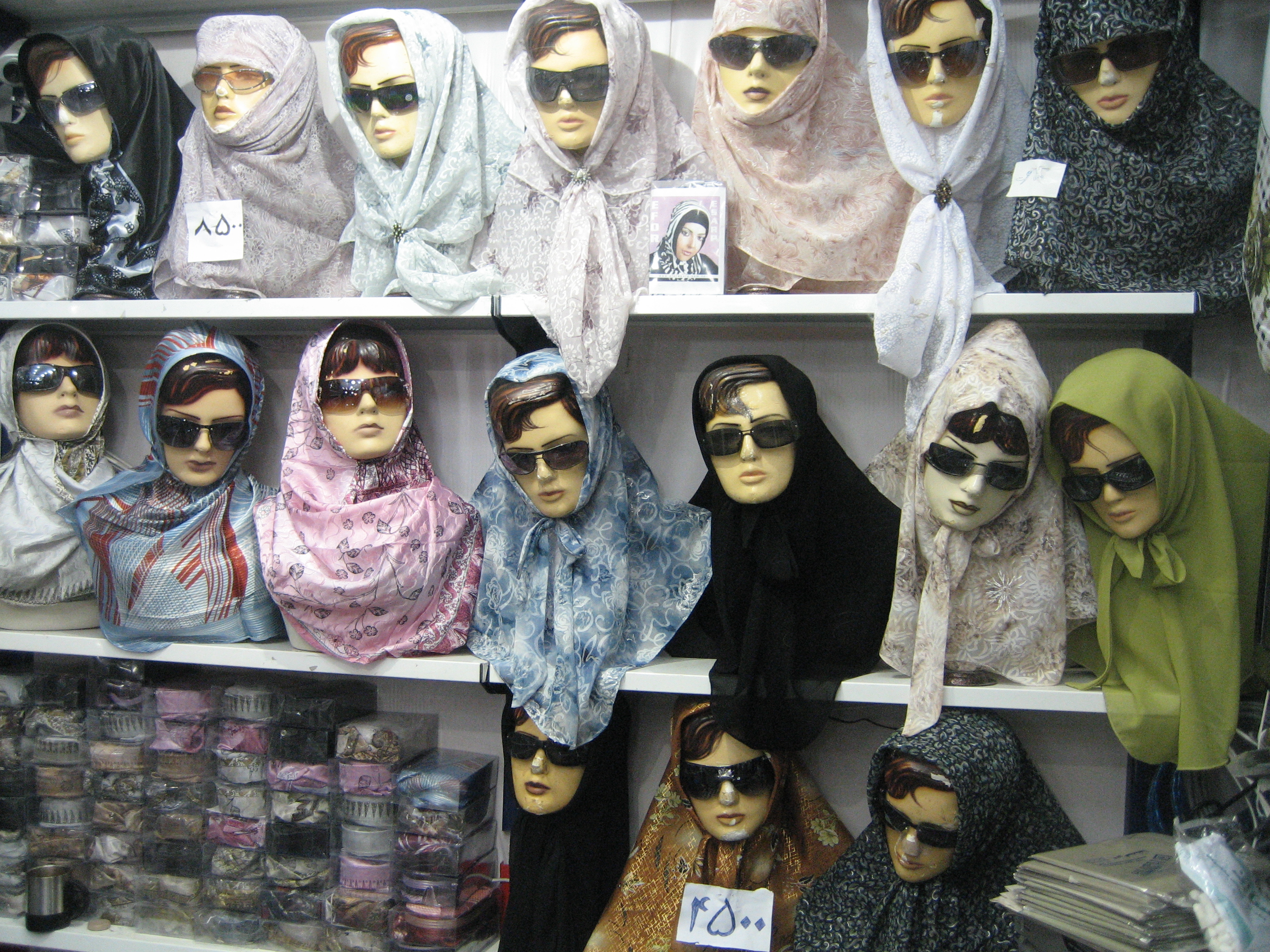
What to wear? (Photo credit:  Suzanne Anthony_

What to wear? (Photo credit: Suzanne Anthony)

“It was funny for me that the headscarf is a very powerful symbol that people fear. Women are asked to take them off in the US and women are asked to put them on there. We’re so focused on the power of a headscarf.” She remembers a gorgeous woman who stopped to ask her what she thought about wearing the headscarf and she answered, “I respect your customs and I’m willing to do it to visit your country. What do you think about it?” The woman wore a purple scarf, tossed it over her shoulder and said, “My god does not care about such things.”

On a visit to the holy city of Mashhad, all the women on the tour had to sport a chador, the black robe that covers you from head to toe. A bit freaky at first, they got over that feeling quickly when the Iranians looked at them and giggled. Blending in among a sea of black was an experience Suzanne had never had. She felt a huge energy shift. “All of a sudden you’re one of them now. You’re not the lone vanilla scoop in a chocolate sundae. You’re swept up in that mystique.”

The hospitality also blew her away. “They’d say, ‘Can you come to my house for tea?’ The whole Muslim culture is very much based around hospitality, that if you have a guest in your country it’s considered a gift. You’re considered a guest of honor.” These aren’t things we hear about in the media. Suzanne constantly met people throughout the towns she visited who’d say to her, “America very good.”

They’d also ask a lot of questions but there was one in particular that gave her a lump in her throat. “What does America think about us?”

“You don’t want to answer that question. So I just said people don’t know very much about you, they’re afraid of the government. One woman said, ‘Our government is crazy.’ And I said, our government is crazy too. They’d go on to say, ‘I hope someday our countries can be friends.’”

She went for the blue tiled ceiling but found so much more.  (Photo credit: Suzanne Anthony)

She went for the blue mosques but found so much more. (Photo credit: Suzanne Anthony)

Isfahan, with one of the largest squares in the world and a UNESCO World Heritage site, was her favorite city. Travelers flock there for the Iranian and Islamic architecture, art, history, and parkland. But it was the blue mosques that she couldn’t wait to see. “I’m just crazy about those because you go inside these mosques and the ceiling’s are all honeycombed. Just to walk through a giant mosque and have every surface around you in these blue and white tiles is just beautiful. I couldn’t seem to get enough of those.” She came to feel the same way for the mirrored mosques. She also fell in love with the city of Shiraz with its poets’ shrines.

They visited a caravanserai, a sort of open-air dinner theatre in the desert. It turned into a wild and memorable experience when an Iranian tour group arrived and threw the party of all parties. “They threw upon the doors and dragged us into their party. Before you know it, we were all dancing. It was wild, the headscarves started to loosen and come off and everybody was on the dance floor. As quick as they blew in on their tour bus, they were gone and we were all stupefied. It was like prohibition. Here they were out in the desert and they were breaking all the rules.”
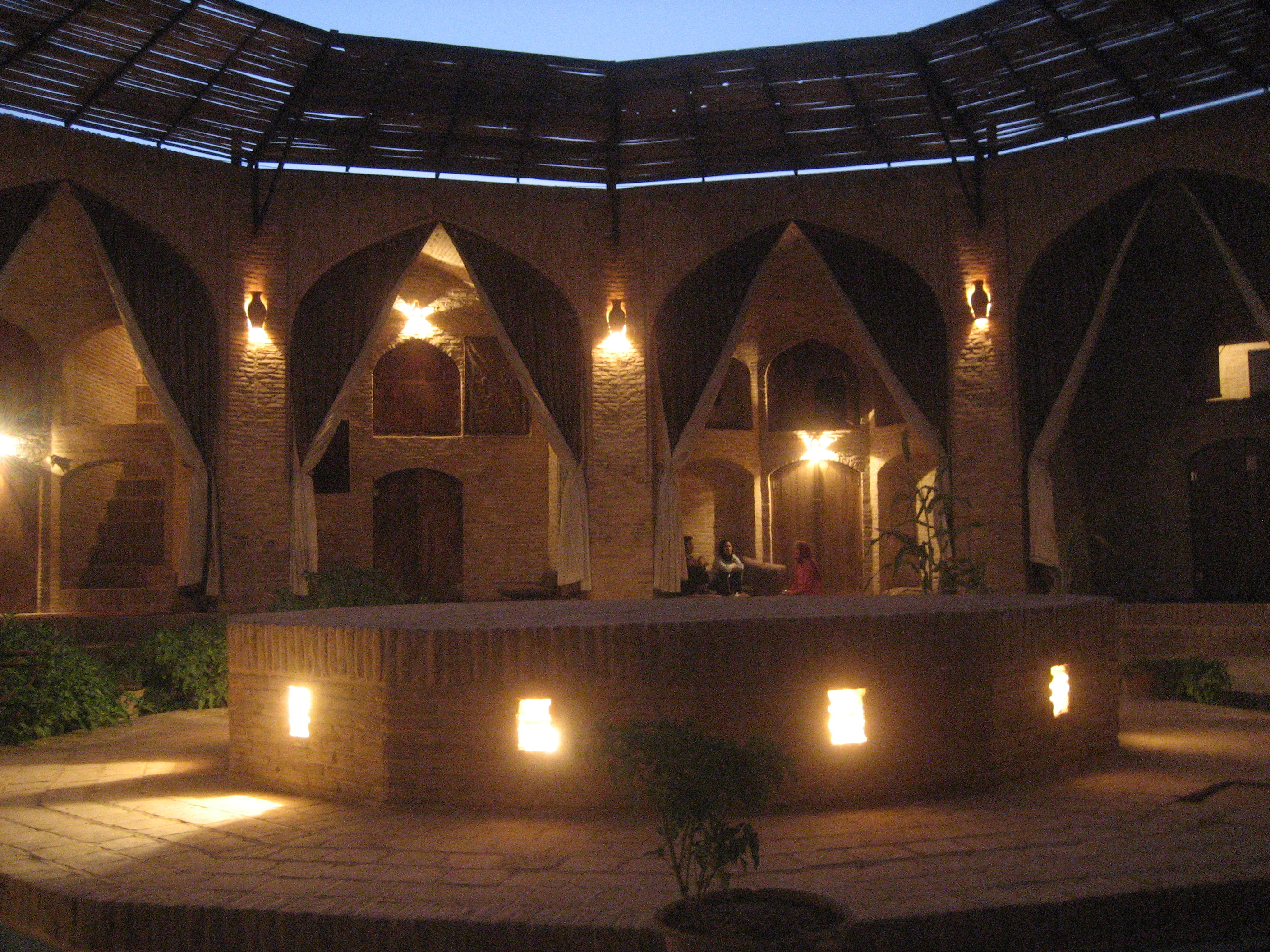
Oh what a night! The caravanserai courtyard.  (Photo credit:  Suzanne Anthony)

Oh what a night! The caravanserai courtyard. (Photo credit: Suzanne Anthony)

Suzanne thinks it would be an amazing thing for more Americans to visit Iran. Why? Because she thinks if you open up your mind and your heart, it’ll be an enriching experience like no other. “I was relieved to not have everybody be right who thought something bad was going to happen to me there,” she said. “Don’t be afraid of what you don’t know. Go and see it for yourself.” Another plus, women don’t have to pack much because nobody’s really going to see you!
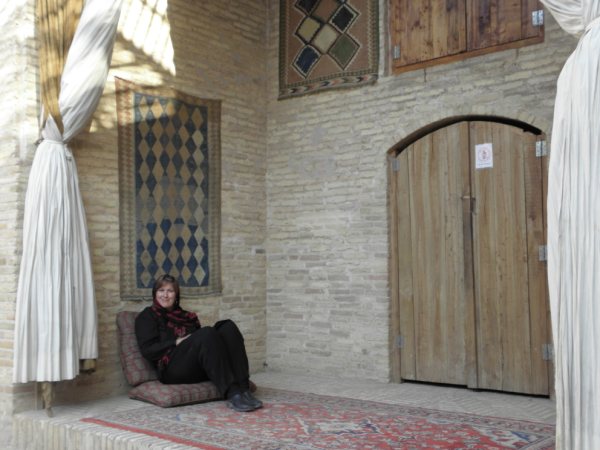
My nomadic soul sister, Suzanne.

My nomadic soul sister, Suzanne, chills at the caravanserai.

I’ve barely scratched the surfaced here. Visit Take To The Highway to get all the details behind Suzanne’s incredible journey in Iran and to follow her other trails.
Seeing the Awe, Not the Ugh.

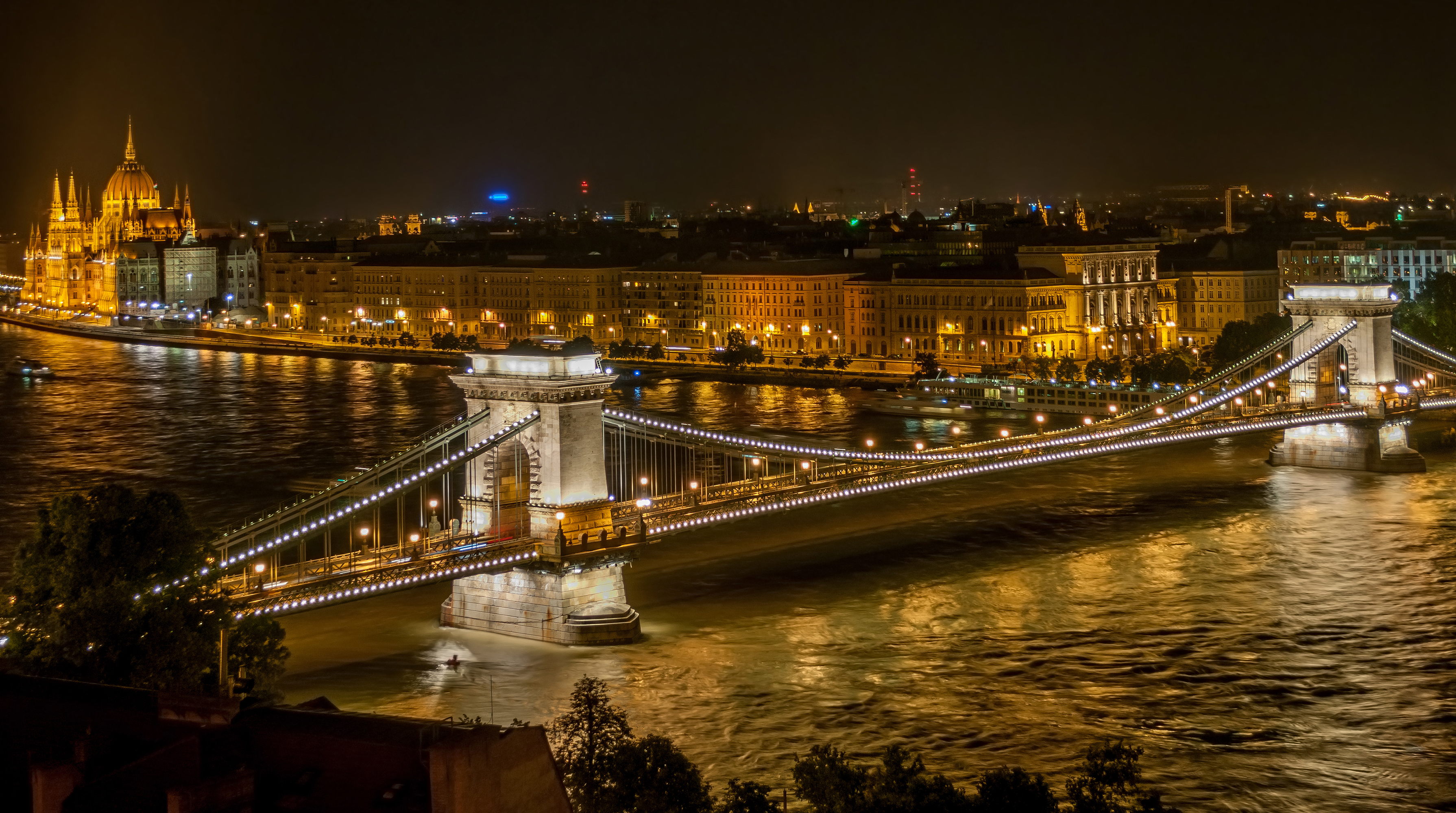
Take me to the river. Széchenyi Chain Bridge, Budapest.

Take me to the river.   Széchenyi Chain Bridge, Budapest.

Back in the fourth grade one of the assignments given to my class was to research the history of a country.  I wanted England.  I was nine years old and I was really into English novels and all things British.   England was mine.

The teacher passed a hat around and asked us to pick a folded slip of paper from it and pass the hat to the student behind us.  My turn came and I dipped my hand into the hat, closed my eyes and willed England.  Instead, I got Hungary and the only thought that went through my head was—you gotta be kidding me (actually it was something else).

I asked my teacher if I could swap Hungary for England.  She said, no.  She was the teacher, I was the student, and this was Catholic school.  Back then, no really did mean no.   So I had myself a little pity party on the way home, got over my bad self and sucked it up that I was stuck with a country that I had no interest in, much less to write about.

I thought of that experience recently when I met with a group of travel counselors to discuss the value of them writing about their travels.   Many of them don’t think that they can write or they’re uncomfortable with the idea of it.  For others, there’s no interest or they just don’t see the value in it.  I get it, it’s not what they signed up for, it’s not in “the box” that’s their profession.  Throwing foreign stuff into the game of what we do every day and what we think we know can be startling and icky.

Recently, I wrote an article about developing your skills and interviewed career coach Kathy Gonzales.  She told me, “The thing that repulses you has gold inside.”  What exactly does she mean by that?  Basically, that we put roadblocks in front of ourselves that might prevent us from seeing an opportunity.  We assign an “ugh” instead of awe to an opportunity.   She also offered this advice, “Do something that you don’t want to do. Do something that you’re afraid to do because in the process of doing that you’ll open yourself up to removing certain blocks, you’ll open up perspectives, and you’ll learn something new.  Mostly, you’ll learn something that you thought you knew but don’t know.”

I get that doing something you don’t want to do is uncomfortable.  I also know that travel agents who take the first step and put pen to pad will discover a world inside themselves they didn’t know existed.  They’ll see the gold.

I reluctantly researched Hungary and the more I learned, the more I burned with curiosity about the place.   I begged my mom to make goulash but that wasn’t happening in our house.   In the end, I turned in my paper and turned out an A+.  It felt good, I felt good, I was on fire.

Decades later, I found myself in Hungary gazing at the magnificent stone, Széchenyi Chain Bridge that reaches over the Danube River connecting Buda to Pest.  I felt a connection to this place.  I also remembered my stubborn, younger self.  Funny how things shake out.

Yea, sometimes we have to push ourselves kicking and screaming into doing something we don’t want to do it.  But try it.  Give yourself a chance.  You just may discover you’re on fire.

Sorry About Your Vacation But We’re Closed.

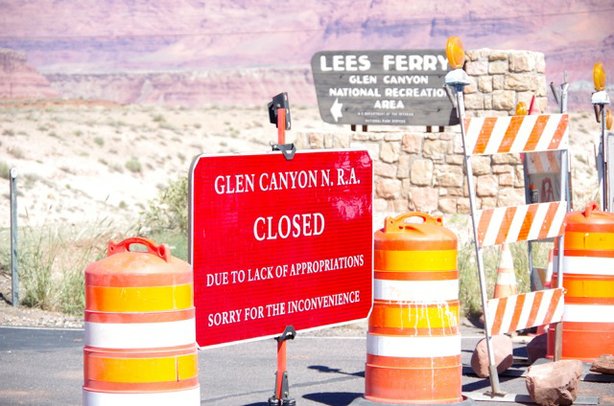
You're joking...right? (Photo credit: Laura Morales.)

You’re joking…right? (Photo credit: Laura Morales.)

Yesterday my boyfriend asked me, “How pissed would you be if when we’d gone to Egypt they’d told us ‘sorry, the pyramids are closed today’?”  I don’t think I really have to answer that question.

But that’s how it’s gone this week for millions of tourists across the United States because of the federal government shutdown.  National parks, museums, and other famous institutions that draw visitors from across the U.S. and abroad are shut out from some of the most inspiring, natural, awesome, and thought-provoking experiences this country has to offer.  For the folks doing the traveling it’s been a major disappointment.  Sure, there are some who’ve made lemonade from the lemons of our government’s internal affairs, but for others the plans they’d had to visit the country’s federally run attractions have turned out to be a bust.

Travel advisors and tour operators who are politically aware may have had a jump on things by having a Plan B up their sleeve for their customers.  I hope so, anyway.   But for travelers who like to go it alone, what started out as an eager vacation has most probably turned into a frustrating experience and a poorer view of our government.  This especially holds true for any foreign visitors.

As of today, the government is in day four of its shutdown but there’s strength in numbers. Travel agents, the travel industry as a whole, and U.S. citizens can do something about it.

How?  All you need to do is write your federal representative.

Tell them how you feel.  Especially for anyone in the travel industry whose livelihood depends on tourism.  It’s that easy.

Power to the people, and to travelers.

Discovering Southern Values.

Ruffner Nature Center in Birmingham.  (Photo credit:  A. Headrick)

Ruffner Nature Center’s view in Birmingham. (Photo credit: A. Headrick)

Travelers lucky enough to fly around the globe are always on the hunt for new and different experiences and perspectives. For anyone without a lot of time to spare or who like quick getaways, there are plenty of cities and towns in the good old U.S.A. offering amazing food, cultural and natural attractions, or historical value. One of them is Birmingham, Alabama. That’s right, Birmingham, Alabama.

Why Birmingham? Because this week in September marks the 50th anniversary of the Civil Rights Movement in this southern city and institutions are generating tourism by making civil rights relevant for a younger generation. That might sound like a strange thing for anyone who grew up during the Civil Rights Movement, or for those of us who grew up in racially mixed areas exposed to a generation of African-Americans that had to fight for their rights. It seems crazy that there are Americans who aren’t fully aware of the events that took place during what is probably the most turbulent period in American history, but there are. This year, Birmingham has seen an uptick in visitors—whether through school outings, individual travelers, or families who want their children to understand the facts and details of one of this country’s darkest periods.

The Birmingham Civil Rights Institute.

The Birmingham Civil Rights Institute.

The Birmingham Civil Rights Institute (BCRI) opened in 1992 as an interpretive museum and research center.  BCRI is a cornerstone of this city and documents Birmingham’s role in the Civil Rights Movement.  Its mission is to promote civil and human rights worldwide.  Many of their education programs are geared towards young people with a goal to start a fire in the heels of the future. Their outreach education program reaches 20,000 people in various community spaces, and they have traveling exhibitions. The city gets its fair share of tour and convention groups, and individual travelers, who come to soak up the history by visiting BCRI and other historical places like the 16th Street Baptist Church, Bethel Baptist Church, and Kelly Ingram Park.

Kelly Ingram Park draws visitors to Birmingham.

Kelly Ingram Park draws visitors to Birmingham. (Photo credit: CLUI.)

For anyone pulling a weekender, there’s entertainment, outdoor activities, and nightlife. Whether your palate is high-brow or low-brow, you’ll find down home cooking and finger-licking barbecue, as well as some of the most exceptional food in the country. Over the past few years a handful of the city’s chefs were recognized with the James Beard Award and in Food + Wine. Its natural beauty is discovered at the 67-acre Birmingham Botanical Gardens, and five miles from the city is Ruffner Mountain Nature Center, a 1,000-acre preserve and urban forest with loads of hiking trails. State parks offer more opportunities to hike and bike year-round. Anyone into fishing will be happy to discover that Alabama is known as the “bass capital of the world.”

Birmingham shakes with history and It’s hard to go anywhere in the city without finding a place that’s significantly tied to the Civil Rights Movement. Its past is dark and complicated but the unity created by the brave, and mostly young, men and women during the Civil Rights Movement spurred a government to move this country forward.  It might not be a city that instantly comes to mind when you think about traveling in the U.S. but the historical and educational value, and southern hospitality,  you’ll find there is an excellent reason to visit.

It’s also one of the most affordable cities in the country.  If they don’t have it up their sleeve already, travel agents with the good habit of recommending destinations may want to add it to their list of places to visit in the U.S.

What Do Wildlife and Travel Advisors Have In Common?

King of the Serengeti.

King of the Serengeti.

Tourism is the number one driver in the economy of many countries, especially in Africa. Millions of travelers visit countries on that continent each year to experience the one thing most people blow off as a dream—a safari. The jungle is teeming with all sorts of wildlife but most travelers go to see the Big Five—the Cape buffalo, elephant, leopard, lion, and rhino. Few things compare to the thrill of seeing them up close and personal. It’s humbling. Sadly, over the past decade more and more of these animals are on the endangered species list because of the profit made from the illegal wildlife trade. Most notably, the elephant, the rhino, and the lion. Worldwide and local conservation organizations are doing their best to prevent their extinction but the future of these creatures doesn’t look good.

Young rhinos goofing around in South Africa.  (Photo by author.)

Young rhinos goofing around in South Africa. (Photo by author.)

One of the reasons is that the money poachers earn from slaughtering these animals provides a massive source of income. In turn, some of these profits are funneled to fund terrorist groups. It’s amazing what you’ll find when you follow the money, and you can learn more about this in Killing Lions, Buying Bombs.  I’m not certain of what the solution is to deter poaching, it’s multidimensional for sure but I do know that education plays a huge role.

Another is for the travel industry to recognize the direct threat it poses to its livelihood. Knowledge is power and travel advisors who stay informed and educated about conservation bring value to its efforts by being part of the conversation and raising awareness. Tourism generates billions of dollars to the industry each year from travelers who set their sights set on a safari. What would be the draw if these animals didn’t exist? Travel advisors matter. Every voice and advocate who partners with conservation efforts, on any level, matters.

Chillin' at Chobe in Botswana.  (Photo by author.)

Chillin’ at Chobe in Botswana. (Photo by author.)

On the flip side, the communities within these countries need to be educated about what the loss of tourist dollars would mean to their economy and livelihood. The money generated by tourism in these countries not only pays the people directly connected to the travel industry, but indirectly as well. If managed right, this money goes back into the infrastructure, schools, healthcare, and the protection of wildlife and its natural habitat.

The rising extinction of these animals is alarming, but the article Through The Eyes Of The Maasai is inspiring. For starters, it made me want to book a flight to Kenya. But what really got my attention is how the Maasai, a semi-nomadic people, through education and collaboration with local and international communities realize that to keep their culture they have to shift their way of thinking and living. The Maasai occupy large tracks of land near game parks in Kenya and in northern Tanzania, live under a communal land management and use seasonal rotation to manage their livestock. The Masai Mara National Reserve is a huge draw for tourists who visit to experience the bonanza of wildlife, especially the wildebeest migration and to see the big cats. The camps that offer accommodation, some on Maasai land, to these visitors benefit tremendously. For tourists, the value of the trip is usually immeasurable.

Dmitri Markine.com http://www.dmitrimarkine.co...

Masai Dance, Maasai Mara Reserve,Kenya. The higher you jump the more women you can marry.(Photo credit: Dmitri Markine Photography)

Whatever side of the tourism road you’re on, education is key to preserving not just the wildlife but the habitat and way of life within the countries most folks regard as “bucket list” destinations.

Everything—from the lion to the livestock herder—is connected.

http://www.youtube.com/watch?v=bGdHmDpqx6E


The NSA, Edward Snowden, and the South of Italy.

Italy's Palinuro beach. (Photo credit: G. Nepi)

Italy’s Palinuro beach. (Photo credit: G. Nepi)

Fires, drought, tornadoes, and a relentless heat wave across much of the US.  July pretty much did us in. Now August is here and the government’s put a crimp in our travel plans.

Some people mark Labor Day as the end of summer, not me.  My friends are familiar with my mantra of “summer’s not over ‘til I say it is.”  September sometimes turns out to be the best month. The heavy heat is off your back and most days are clear blue skies. In which case—unless Mother Nature unleashes some more of her relentless wrath for messing with her ground work—by my count there are seven or eight perfect weekends left to get lost. If you can tack on a Friday and/or Monday, all the better.

If you’d planned on any Middle East travel…well, we know what happened to that itinerary. Talk about things getting hot. But let’s get back to August, the quintessential summer month. Now we’ve been told that we’ve got to watch our backs if we’re out there flying the friendly skies internationally. Seasoned travelers roll with these punches and tend not to get freaked out by this type of information. This is when flexibility comes in handy.

Summer in Moscow.

Summer in Moscow.

And then there’s Edward Snowden. For weeks I’ve wondered what the hell he’s been eating in that Netherland of the Moscow airport he’s been calling home. As a food snob, the thought that he’d been subsisting on processed airport cuisine made me cringe. But this young man has friends in high places, so I’m sure he was well-tended. He’s obviously not a traveler. For a man who did work for the folks who play in secrets and shadows, he should have read Ian Fleming in his spare time. Sure, Russia just granted him asylum but of all the places to hole up, he picked the birthplace of the KGB. Poor planning Mr. Snowden, you should have consulted with a travel agent.

Jumbo Rocks campground at Joshua Tree. (Photo credit: Nate2b)

Jumbo Rocks campground at Joshua Tree. (Photo credit: Nate2b)

There are plenty of weekend adventures out there waiting for you. It’s sometimes a little too easy to put a getaway—whether it’s camping, a beach house, or a quick flight—on the back burner.  If friends invite you somewhere, go!  There are always chores to do, especially if you’ve got kids, but you’ll never regret having made the trip. Besides, that’s what the cooler months are for. An Italian barber my guy goes to told him, “September? Phew, Italy in the South–it’s gorgeous!  It’s still hot enough to swim and everyone’s still going to the beach.”

Sounds like an excellent plan to me.

Sweet Stuff in Toronto.

Toronto skyline.

Toronto skyline.

Visiting friends or family who live in different states or countries offers up a different perspective to experience the local scene of a place. It’s a double-trip because we can check out highlights we might be curious about and capitalize on insider info. We often take these visits for granted, they’re sometimes done out of obligation, but they can be loaded with gems. Travel agents who spend time with far-flung friends or relatives can use the opportunity to hone their writing. Interviewing their hosts, and any friends or neighbors, can expose you to a bird’s-eye view on a simple slice of life. I lived in Toronto over 20 years ago, and back then the town would roll up early. Sundays were like being in lock-down, and you couldn’t buy a thing—or a drink.  After several years, I paid a visit and surrendered my control freak nature to my sister Sandy and my brother-in-law Greg, and enjoyed a different experience of the city.  Today, Toronto pretty much operates 24/7 and the amount of construction with all the high-rise development around the waterfront area answers the question of why there’s a crane shortage. It’s crazy.

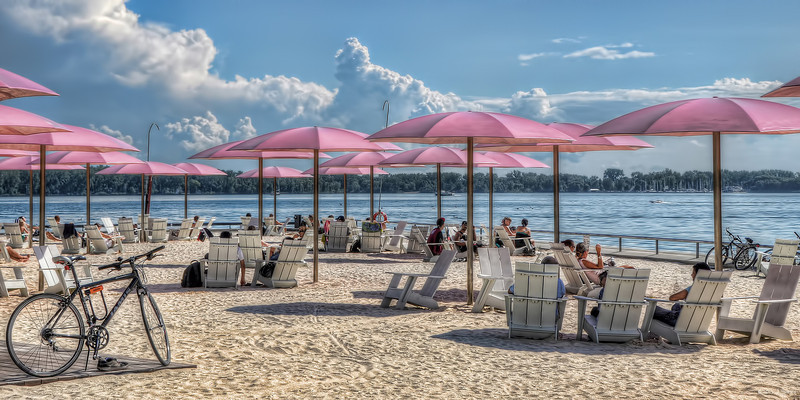
Local chill out at Sugar Beach.

Locals chill out at Sugar Beach.

Toronto was in the grip of a heat wave, so my hosts recommended we check out Sugar Beach. This former parking lot on Queen’s Quay is now a two-acre urban beach for city dwellers. Bright bubble-gum pink umbrellas, white Adirondack style beach chairs, candy-stripe rock outcroppings, a mini boardwalk, and artificial sand offer a welcome respite for locals and tourists and a tree-lined promenade runs through the park. Our visit coincided with the Redpath Waterfront Festival, a four-day experience of nautical history, digital storytelling, extreme watersports, concerts and the Tall Ships’ 1812. Food trucks and barbecue stands catered to the crowds and reps from Tourism Prince Edward Isle offered up a cup of their famous mussels and fries if you entered their five-day getaway drawing. I submitted an entry form and quickly went from feeling like a local to a tourist but it was all good. Under a beach umbrella, we enjoyed the scene and listened to the band.  Later, we cranked up the air-conditioner and they turned me on to a sugar kiss.  A fruit that’s a cross between a cantaloupe and honeydew melon, and its sugary sweetness was pure, thirst-quenching delight. That evening we grilled black cod and sweet corn they’d picked up earlier from the famous St. Lawrence Market, where you could easily plan a day trip and experience a major food orgy.

Some major decisions are made at the St. Lawrence Market.

Some major decisions are made at the St. Lawrence Market.

A Cabbagetown house.

A Cabbagetown house.

My family lives in Cabbagetown and it’s a gem of a neighborhood. It’s the largest area of preserved Victorian houses not just in Toronto, but in North America, and strolling though it is like being in a fairyland. The Irish settled this area in the 1800s and grew loads of cabbage, hence the name. Today, it’s the picturesque architecture of the brick homes with front yards of pale peach to scarlet red rambling roses, exploding hydrangea bushes, lavender, azaleas and rhododendron that creates what feels like an exclusive haven. “I’ve never sat out here,” my sis said as we settled on her front steps, breathing in the garden’s scent and sharing intimacies on life, love and the pursuit of happiness. We typically hang out in their backyard but I guess it took this Brooklyn girl to remind her of the pleasure you get sitting on your stoop. Later, we went into the night to find the Supermoon that had graced the planet but we must have looked like zombies as we staggered through the quiet streets with our heads craned trying to glimpse it through the lush trees arches.

The next evening, we enjoyed an after dinner stroll and stopped to chat with neighbors who were enjoying their own stoop. We exchanged introductions and got talking about the city and the area. Tony grew up in Pakistan during British rule and immigrated to Toronto when he was younger. “Because of my ethnic background, things were very challenging back then,” he said. But times have changed and he and his wife Holly, from Montreal, love their life in Cabbagetown. My sister mentioned that she moved to Toronto 38 years ago from New York. “Back then it felt like a small town, and it was conservative and a bit uptight. It was mostly Scottish, English, and Irish, now there’s an amazing ethnic mix,” she said. Toronto has most definitely grown into a cosmopolitan city. The Danforth is the Greek area, there’s also a Little Italy, a Little India, Little Portugal, and Chinatown. Not to mention a dynamic food scene, shopping, music, arts and all the other ingredients that contributes to a city’s cultural vibrancy. “It’s a great city, it somewhat reminds me of New York now. And then there’s lovely Cabbagetown, which is kind of like, you know…I know the butcher, the baker and the candlestick maker,” she said. Greg’s American too, and originally came to Toronto on a research project. “I was disappointed Canada didn’t feel like a foreign country” he said. But two years later he set roots down and established himself as a professor of economics at the University of Toronto. These folks are all retired now.

Hidden lanes in Cabbagetown.

Hidden lanes in Cabbagetown.

We moved on and meandered through the neighborhood’s secret lanes, strolled through small Riverdale Park where locals walked their dogs, or just enjoyed the twilight hour on a bench. Across the park is Necropolis Cemetery, a lush and historic resting place. In front of a grand home we glimpsed feet on the top rung of a ladder that disappeared into a glorious tree whose branches spread across all directions of the garden and street. Looking up, we noticed it was a cherry tree rich with bright red drops of fruit. I asked the guy trimming it if they were edible. Then I heard a snap and he handed us a two-foot long stem, loaded with cherries. We enjoyed the sweet and juicy offering all the way home.

With the heavy heat came heavy thunderstorms. My flight was canceled and I had to spend another day with family, but it was all good.

Stay tuned for more on things to see and do in Toronto.

Island Hopping.

Salar de Uyuni, Bolivia.  (Photo credit:  Brendan Vacations)

Salar de Uyuni, Bolivia. (Photo credit: Brendan Vacations)

One of the gifts of working in travel is the wide network of colleagues you meet along the way.  Across air, car, cruise, destinations, hotels, travel advisors, tour companies, and event specialists—we’ve cumulatively traveled the globe!  So it’s always a treat when you run into each other because chances are someone will have just returned from a trip.  One of the features of Ports Are Calling will be a Q&A with industry insiders—or people who have a thing for travel—to spread the word, share a moment or shine a light on a particular destination or travel experience.   I recently caught up with Catherine Reilly, Managing Director, Brendan Vacations, Ireland.  When she’s not crisscrossing her motherland, Miss Reilly can often be found hiking near Lake Como or exploring a new destination experience.  Because she’s blessed to travel so much, she considers herself a “privileged delinquent” and it was good to learn about her recent visit to Easter Island.

Rapa Nui view from the top.  (Photo credit:  Explora lodge, Rapa Nui)

Rapa Nui view from the top. (Photo credit: Explora lodge, Rapa Nui)

Q:   What inspired you to travel to Easter Island?
A:   I’ve visited South America several times, places like Machu Picchu, Patagonia, Galapagos  Islands, the Amazon Rain Forrest, Iguassu Falls, and the wonderful cities of Santiago, Quito, Rio De Janeiro, Buenos Aires, Montevideo, Lima and more. I love this continent and this time a visit to Easter Island fitted nicely into my travel plans.

Q:  So you obviously have a thing for South America.  What is it about that continent that attracts you?
A:  Reading about South America as a child I think I was first attracted by the wonderful place names, Paraguay, Uruguay, Patagonia, and Lake Titicaca.  Now as a traveler I am inspired by its ancient civilization and culture, that’s what draws me back again and again. 

Q:  Do you think that might have something to do with the ancient history that’s in your bones as an Irish woman?
A:  In Ireland all around us we witness our ancient civilization.  At Newgrange for example we have a structure built thousands of years ago that remains today. At Machu Picchu the ancient civilization of the Incas is powerfully presented to us and through the statues on Easter Island we learn about the ancient Polynesians.  The debate continues as to whether these structures, temples, monuments were built to venerate their dead or worship their Gods, or were there other reasons? That said, the fascination is with the people who built these amazing places and things with such engineering skills, knowledge of geometry, astronomy, and respect for their environment. Today we visit, stand in awe and remind ourselves they didn’t have metal yet!

Unfinished Moai.  (Photo credit:  C. Reilly)

Unfinished Moai. (Photo credit: C. Reilly)

Q:  What about Easter Island surprised or fascinated you?
A:  The locals refer to their island as Rapa Nui and you visit to see the Moai (not statues). Interestingly, ‘Rapa Nui’ is the name of the country and the local language and ‘Rapanui’ refers to the people.  The island is so small, about 26 miles long. The biggest attraction is, of course, the Moai, there are so many of them and they are all over this little island and they’re so big.  They’re not protected in any way, so the island relies on the visitor to treat these treasures with respect. What’s fascinating is not just the monumental stonework and the amount of effort it took to build the Moai, there is also the mystery of why the islanders toppled them all over.

The Moai.  (Photo credit:  C. Reilly)

The Moai. (Photo credit: C. Reilly)

Q:  They’re statues but the Moai sound like more of a presence?
A:  Oh, absolutely, yes, the energy on the island is amazing.  It’s like when I walk around some places in Ireland, I feel like I’m walking in the footsteps of my ancestors.  There is a presence on Easter Island and when you visit Rano Raraku, the quarry where there’s something like 400 of these statues still there in various stages of carving, some are half-finished and some are just heads, it’s like one day, the people making them just all up and left.

Easter Island.  (Photo credit:  Brendan Vacations)

Easter Island. (Photo credit: Brendan Vacations)

Q:  Aside from the Moai, were you drawn to any particular part of the island?
A:  My favorite place on the island was the Rano Kau, a crater shaped like an amphitheater. When I arrived at the crater it was clear just how remote it all is, truly wonderful, you’re just surrounded by the big, blue ocean.  The island is Ireland green, and the ocean around it is all different kinds of blue and turquoise, and every time you look at it you can see a different color.

Catherine at Rano Kau on Easter Island.  (Photo credit:  A. Reilly)

Catherine at Rano Kau on Easter Island. (Photo credit: A. Reilly)

Q:  How’s the island hospitality?
A:  It’s fantastic, super friendly.  The population on Easter Island is approximately 5,500.  It’s governed by Chili and 60% of the islanders are Rapanui, and the rest are from the mainland. Most of our guides were Rapanui and they were all very proud to share their stories.  The islanders are extremely welcoming. The post office will even stamp your passport with a Rapa Nui stamp!

Q:  Where did you stay?
A:  I stayed at the Explora lodge, which is five miles from Hanga Roa, where 95% of the population lives and the only place on the island with electricity and running water. There are hotels, restaurants, mini markets and the usual souvenir shops. The local currency is the Chilean peso but you can easily use US dollars. 

Q:  How’s the local cuisine?
A: The food was excellent, great variety, with lots of fresh fish and vegetables. It was all very tasty and healthy. 

Q:  Any interesting experiences?
A:  One of the traditions on the Island is a triathlon with the difference being that it takes place during the Tapati festival in February. It’s only open to Rapanui men, and one of our guides participates each year so it was interesting to hear about it from his perspective. It’s a race that requires extreme stamina. The contestants paddle across the lake 650m in canoes made out of reeds. They then pick up enormous heads of bananas and run one and a half times the circumference of the lake. They then swim and surf across the lake atop a reed surfboard. The men are very scantily clad for this competition.

Q:  How many days do you recommend to visit and what time of the year is the best to go?
A:  I travelled there with LAN, a South American Airline from Santiago.  The flight was just under six hours and there’s daily service. I travelled in the off-season in April, there was some rain but I was able to see the Moai practically alone. It’s quite remote, the island is situated in the Pacific Ocean, half way from the coast of Chile and Tahiti, three full days are a must. The Tapati Festival happens in February and that’s peak time to visit.

Q:  Most people over pack for trips, what do you recommend for an Easter Island visit?
A:  You’re visiting a special place that so few others have ever set foot, so bring an open mind.  After that, all you need is casual clothes and comfortable walking shoes—something closed toe is good, not flip-flops or sandals. High season is January through March but the weather is fairly good for the remainder of the year, so I’d recommend sunscreen and a hat.  Pack a light rain jacket for an off-season trip.  It’s an island so there are beaches where you can swim, and for divers there are caves to explore.  Make sure you have plenty of memory card space and batteries for your camera.

Q:  Why should people visit Easter Island?
A:  Because it’s one of the most remote inhabited islands in the world with a unique history and archaeological wealth greatly disproportionate to its size. A visit to the island will unlock some of the mysteries associated with Rapa Nui, sort out the facts and fiction.  

Q:  Do you recommend hooking a visit to Easter Island onto any other destinations?
A:  For sure—Peru, Chile, Argentina, Brazil.  Chile and Easter Island for example.  Chile is home to some of the most beautiful and exotic scenery in the world, from the Atacama Desert, the driest place on earth, to the magnificent Torres del Paine National Park in the Extreme South, not far from Antarctica, to the beautiful city of Santiago and the nearby vineyards—the itinerary choices we can design here are as diverse as they are endless.  Brendan’s team, Boutique Journeys, creates amazing South American itineraries and extensions to Easter Island.

Empire of the Incas, Peru.  (Photo credit:  Brendan Vacations)

Empire of the Incas, Peru. (Photo credit: Brendan Vacations)

Q:  Easter Island is considered something of a “bucket list” destination.  How popular is it for Brendan customers?
A:  It used to be difficult to get there but flights have increased and it’s becoming more popular for us each year. When you consider that only a total 4,000 travelers visited the island in 1989 from all over the world and in 2012 that number increased to 85,000.  That’s still a small number in global tourism terms, but when you think of the size of the island and the number of inhabitants a different picture emerges.  If tourism continues to grow, they’re going to have to protect the island in some way because it’s a heritage site. They will probably have to restrict visits, like they do on the Galapagos and on the Inca trail. It’s not a place that you can get to easily so the folks who book with us tend to have a traveler, not a tourist, mindset. They’re not looking for the creature comforts—they’re looking for an experience.  The Brendan team does an excellent job in managing expectations and matching the needs of the customer with the experience

Q:  So it sounds like the ideal thing would be to figure which South American country you’d like to explore and build Easter Island into the itinerary.  If anyone is interested in booking a trip with Brendan to discover Easter Island, what should they do?
A:  That’s easy, they just talk to their travel agent!


You Had Me At Margaritas On The Rocks With Salt.

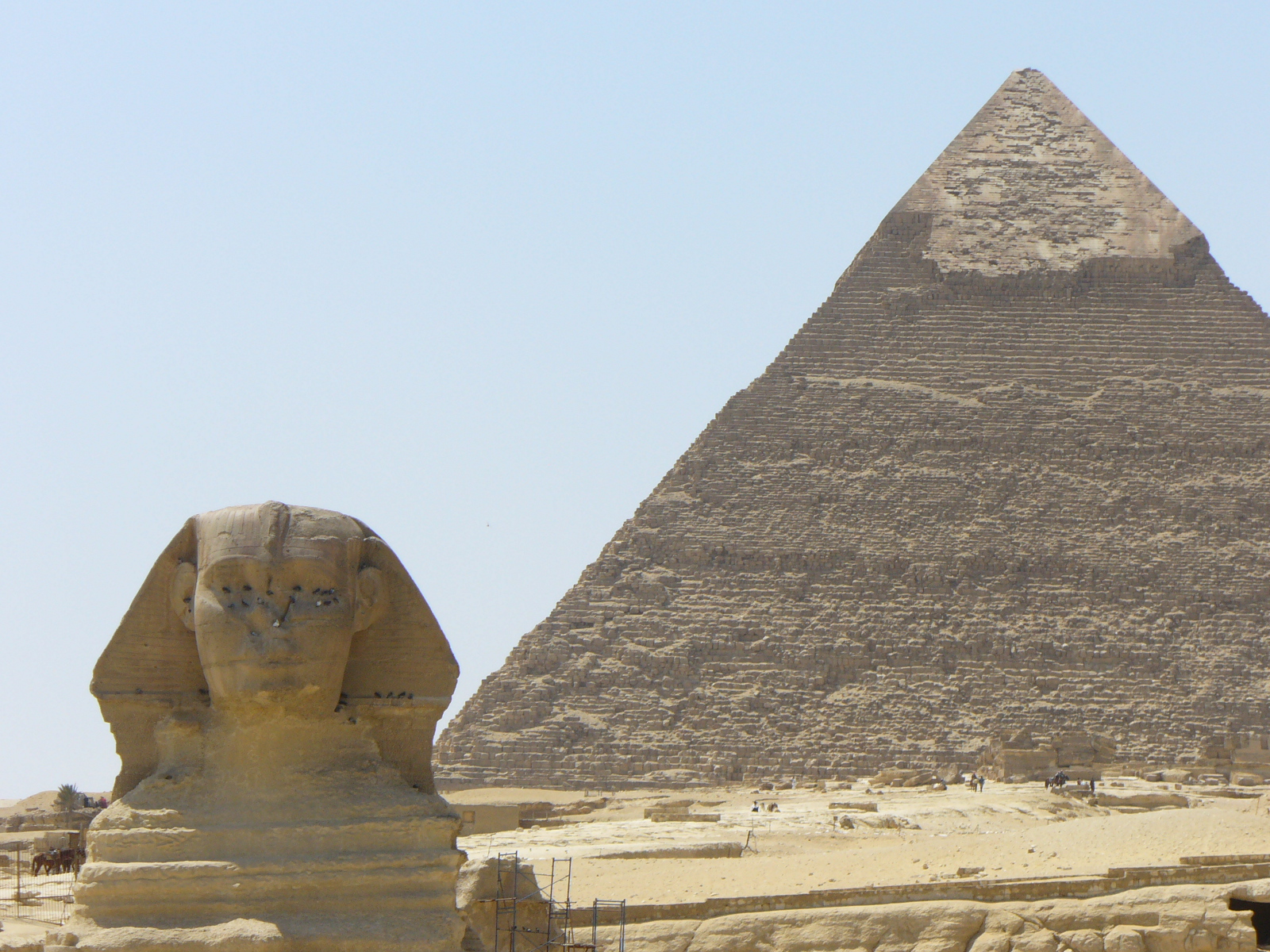
Sphinx and pyramid. (Photo by author.)

Sphinx and pyramid. (Photo by author.)

Last Saturday a friend invited me over for a Mexican dinner.  Our meal would start on the stoop with margaritas on the rocks with salt, along with fresh guacamole and chips.  Yum…she didn’t have to ask me twice!  She makes a mean margarita and a killer bowl of guac.   I could make those things myself but why should I when those are two of her specialties. I had no doubt that the main course would also be superior.  What does this have to do with writing and travel?  A few things…

So you travel agents out there…do you have specialty? If so, do you write about it?  Before creating this blog, I shared its main objective with an acquaintance that asked, “Travel agents still exist?”  “Yes, they exist,” I answered.  “Who uses them?” was his next question.  It was easy to understand his perplexity.   Most folks book their travel online, it’s where they think they’ll get the best deals.  Sometimes they do and other times they get a raw deal.  Most people use the Internet for a majority of their transactions these days.   True, it can result in huge cost savings.  It can also result in a lot of time spent in front of a computer, especially when it comes to booking travel.  They don’t call it the “web” for nothing and even if you know where you want to travel, chances are you’ll get stuck, for at least an hour but probably a lot longer, trying to figure it out.   Everything you need these days is just a click away but price doesn’t always equal value or a great experience.

Chalkley Treehouse experience at Lion Sands in South Africa. (Photo credit: Lion Sands.)

Chalkley Treehouse experience at Lion Sands in South Africa. (Photo credit: Lion Sands.)

Whether it’s eco-tourism, safaris, cruises, hiking, surfing, cooking, or whatever country you can pinpoint on the map, if there’s a destination or travel experience out there that the customer wants, as a travel agent you’re in a prime position to bring them to it.  So how do you get them to connect with you instead of spending hours at their computer looking for the best deal?  Specializing gives you an edge.  Use that edge and write about the destination or experience that you’re passionate about.  Entice them.  Show them what they’re missing and how you can bring that experience to life for them.  Writing helps readers establish a relationship with you.  It’s a way to communicate your knowledge and value up front.  It’s about building trust through your expertise.  It’s about letting them know that you’re still out there rocking in the free world of commerce.  Show them your version of a mean margarita and a killer bowl of guacamole.

Tango dancers in La Boca, Buenos Aires. (Photo by author.)

Tango dancers in La Boca, Buenos Aires. (Photo by author.)

“Two weeks ago I met a travel agent.  I thought they were all gone. Shows you how crazy I am—I’m sure there are others like me out there,” said John Walsh, CEO & President, SightSpan Inc.  He’s right—there are lots of others out there like him.  Walsh travels extensively and books online, directly with the airline.  Asked why he doesn’t use an agent he said, I don’t use a travel agent due to lack of a relationship and it seems faster for me to book business trips and vacations myself.”

Understanding this point of view needn’t be a reason for travel agents to throw in the towel, but rather an opportunity for them to understand why it’s important to leverage their expertise and assets and market themselves through writing.  Agents who specialize have a head start to differentiate themselves within the competitive marketplace to influence travelers and communicate their value.  For readers who latch on to a specialist’s insights, they won’t have to think twice about how to book their travel the next time they want to explore options about a particular destination.

Ballynahinch Castle, Galway, Ireland.  (Photo by author.)

Ballynahinch Castle, Galway, Ireland. (Photo by author.)

When I asked Walsh if he’d consider using a travel agent he said, “I would, if their services were presented with a clear value proposition and cost benefit offering.  Agents need to better state that they’re still out there and articulate their value.  They need to reeducate people of why it’s best to have a human working with you when something goes wrong—and it always does.”

Bedouin riders at Petra, Jordan. (Photo by author.)

Bedouin riders at Petra, Jordan. (Photo by author.)

The best reason for using a knowledgeable agent is that they’re there for you when the unexpected happens and you have to cancel or change your plans because an ash-cloud exploded over Europe or because you fell off your scooter in Bermuda and landed in the hospital. I hope you never have to experience having to suddenly return home from a foreign land when you booked everything on the Internet.  Any travel agent worth their salt will be able to turn you on to the best experience for your money or save you from having that “trip from hell” where perhaps your room isn’t reserved or your hotel is located in the wrong part of town.  Agents who are truly connected to a destination or travel experience can dive deep for you.  If you have any doubts, take a look at Condé Nast Traveler’s Top Travel Specialists Collection or Travel + Leisure’s A-List: Top 100 Agents and you’ll see what I mean.  After reading through a few of these specialists, you’ll be itching to escape somewhere.

So if you’re a travel agent or counselor who specializes, share your expertise.  If you’re a traveler, think about visiting your local travel agency and get to know the experts.

Margaritas on the rocks with salt. (Photo by author.)

Margaritas on the rocks with salt. (Photo by author.)

By the way, my friend’s margaritas and guacamole were excellent.  But then again, I had no doubt they would be…it’s her specialty.

Make A Date With Your Writing Mojo.

One of the challenges when it comes to writing is finding time to actually write.  If you’re like me, or the rest of society these days, your life is broken down into chunks of time that we sync up to like robots.

Depending on your lifestyle these activities will vary but here’s a list where most of us probably share some crossover.   Things like—walk the dog, feed the cats, have breakfast, get your kids to school, surf the web, get to work, surf the web, do your job, eat lunch, surf the web, do your job, surf the web, travel home, make dinner, surf the web, go to the gym, practice yoga, go to school, veg on the couch, watch mindless television.  I’m exhausted just going through that list but you get the idea.

Finding your writing voice is a beautiful thing but finding the time to write so you can discover it is a whole different story.   You know you have it in you but some bizarre quirk keeps you from making time to do it.  To add to that, since you’ll be writing about your travel experiences you’ll need to have them fresh in your mind.   But what if the last trip you took was a few months ago?  Unless you have an amazing sense of recall, or have kept a trusty journal, this could get tricky.

Travel Guides

Travel Guides (Photo credit: Vanessa (EY))

What excites you about the countries you love?  What foods have you tasted in your travels that make you wish you lived there?  What intangible bond connects you to a destination so much that you want all your friends, family and customers to experience it?

Let’s make it easy.  To find your voice you have to write.  To develop your style you need to write.   To recount the details and descriptions of a trip, you’ll need to write.  Take a look at your day.   Where can you fit in writing?  This isn’t meant to be a complicated question but I’ll bet there are things that take up space in your day that can easily take a back seat so you can get writing.

Identifying where in your day you’ll commit to writing will be different for everyone.  For me, it’s usually first thing in the morning.   Right now I’m sitting at my table with a glorious bunch of daffodils in my face, listening to sparrows chirp on my fire escape.   Observations and ideas also come to me when I ride the iron worm—aka the NYC Subway system—and I jot them down.  Planes and trains are perfect opportunities to gather the details and descriptions you’ve noted along a journey and start playing around with ideas.

WRITE anyway

WRITE anyway (Photo credit: sbpoet)

Sometimes we need a kick in the pants to get started.  If you need that kind of inspiration then check out Do the Work by Steven Pressfield.  It’s a short, quick read and Steve’s got a great voice.  Reading his stuff is kind of like hanging with a friend but the kind of friend who calls you on your stuff and won’t let you hide behind your wall of resistance.   After reading it, finding the time to write might get easier.

Whether you do it at sunrise or sunset, over your morning coffee or sitting in the park eating lunch, identify a particular time to write and do your best to stick with it. Maybe commit to 15 or 30 minutes to start.  If you keep an appointment calendar then schedule that portion of time into it.   It doesn’t matter when it is so long as you find the time.  Like all of the other stuff we do, it’ll become a habit—and a good one.

None of us do things unless we want to – and want is the operative word here.  So if you want to write, then it’s time to get busy.  Make no excuses and take no prisoners.  Punch insecurity in the face and shove your resistance aside.

The information and experiences you possess about your travels is valuable.   It’s time to get your writing mojo going.   Have fun with it and let me know how you make out.