Category Archives: Uncategorized

Thanksgiving–Let The Games Begin.

(Photo credit:  Daily Telegraph)

(Photo credit: Daily Telegraph)

The holidays are upon us and the general consensus seems to be that they’ve somehow come around faster this year. No one knows how this happened but I have a feeling age might have something to do with it.

If you’re holding out to score a last-minute airfare for Thanksgiving travel, you’ve probably waited too long. With the Wednesday before and the Sunday after this holiday being the busiest travel days of the year, all you can do now is bite the bullet. In which case, you might want to think about flying out on Thanksgiving morning to avoid the madness and the possibility of a slightly lower fare. While you’re at it, you may want to grab the book you’ve been meaning to read or load up your Kindle. The only thing worse than waiting in a long security line, being delayed at the airport, or being stuck in the middle of coach is not having a juicy piece of literature to help you escape. I don’t care what it is—from the New York Post to Proust—be sure you’re packing something to avoid getting sucked into a bad travel energy field.

If you’re driving, fill her up the night before and, depending on your destination, check traffic reports before you hit the road so you have an alternate route plan. If you use a GPS, it can be difficult to reprogram a new route into it if you’re driving solo. Whether you’re traveling with a gang or alone, take the time to plan in advance to avoid any hassles or chance of road rage. And don’t forget the entertainment. Audio books make driving a pleasure. Depending on who your co-passengers are, it’s a unique way to experience a story together and it makes the time fly.

I’d say anyone fortunate enough to travel by rail has it the easiest. It’s one of my favorite ways to go. Again, you can pack some snacks, reading materials, or just chill out to some good music and enjoy the view during the busiest time of the year without all the stress.

Most importantly, don’t forget to adopt a Zen attitude. It’s busy, it’s nutty—it is what it is. You’re one of the fortunate souls who got an invitation and can gather around a table with friends or family to bicker with a crazy relative and celebrate with loved ones.

Wherever you’re going and however you plan to get there, if you’re staying past the holiday, check out local happenings. Chances are that there’s something going on in or near the city or town you’re visiting that qualifies as an attraction.  Even if it’s a nature walk or hike.  Not that there’s anything wrong with it but family gathering typically entails a lot of eating and sitting in front of the TV. Use the opportunity of being away from home and treat it like a destination. Do a little research, you’ll be surprised with what you may find.

Last but not least, thanks to everyone who takes the time to visit Ports Are Calling and for all of the support and ideas towards keeping it going.   The web is full of shiny stuff that attracts your attention, so the fact that you read it means a lot.

Be well, travel safe and enjoy a Happy Thanksgiving.

Tales from the Wadi Rum.

Desert Highways, Wadi Rum, Jordan.“Hard to believe there’s a war going on next door,” said my travel companion. It was 2007 and we were sitting around a small campfire in the Wadi Rum desert. It was a trip we’d hooked on to an event I’d managed in Egypt. We’d chosen that country because we weren’t sure how many years would be left for Americans to travel there before it all went pear-shaped.

After Egypt, the idea was to take advantage of being in the region so we set our sights on Jordan. Through shuttle arrangements we made our way into the desert and the land where Lawrence of Arabia was filmed.

The Wadi Rum is otherworldly and we were happy to be there. A handsome, young Jordanian guide, Ra’ed, met us along the Desert Highway. We hopped into his jeep, driven by a shy, Bedouin, teenage boy and within a few minutes were off-road, traveling through desert red sands. The world we knew disappeared, and aside from the clink and clank from his truck, there wasn’t another sound. We made out way through mountain rockscapes in various hues of crimson. There wasn’t a soul in sight and for this city girl, the empty space was liberating.

Wadi Rum

Not a soul in sight.

Eventually, a long rectangle Bedouin tent came into view and our driver swung a long arc around it and parked. We met the chef, an Egyptian, and then we proceeded to make ourselves at home.

Out came the hookah pipe. I find the sweet smoke a bit nauseating but when in Rome, right? So we sat around and exchanged the typical questions like, “Where are you from?” and “Why did you come here?” but we made quick work of that superficial talk and dove deeper, seeing as it was just the five of us. A group of tourists who’d been in camp earlier in the week had kept to themselves and barely acknowledged them. Frankly, I don’t see how it would be possible to ignore the people who were responsible for getting you in and out of Wadi Rum, feeding you and providing you a tent for sleepy time. The chef smiled and excused himself because he had to get cooking.

Wadi Rum campsite.

Making camp.

Back in the truck, Ra’ed took us through desert. We all raced up sand dunes and slid down them. Gazing around at its natural architecture, the Wadi Rum, also known as the Valley of the Moon, is hypnotic. The sunset reveals deeper shades of red on the rock walls.

Wadi Rum desert.

Not so easy as it seems.

A few hours later, they laid out a banquet table decorated with candles and tray upon tray of food. There were falafel, stuffed grape leaves, couscous with raisins, salads, pita bread, dips of hummus and baba ghanoush, rice with lentils, platters of vegetables, and lots more. I couldn’t imagine how they thought two people could make a dent in it. Ra’ed told us to enjoy the meal. My boyfriend and I looked at each other and in unison said, “Where are you going?” He told us that they’d eat when we had finished. There was no way that was going to happen. We explained that it was extremely uncomfortable for us to dine without them and after much persuading they joined us.

Dinner in the Wadi Rum.

Midnight at the oasis.

Stuffed and satisfied, we sat around on massive pillows, passed the pipe again and gazed at the stars and the shadows the mountains made across the dark sand. A full moon had risen and the chef suggested we build a fire. So we dragged our pillows into the sand around the pit he’d made. There we were, an American, a Brit, an Egyptian, a Bedouin, and a Jordanian. Through broken English, translated through Arabic and a mishmash of a few other languages thrown in, we all got on like a house on fire. There was lot of giggling, talk of what music we liked, and of what America is really like. We did indeed find it hard to believe that Iraq was next door and being made a mess of.

Eventually, things got quiet until the silence was broken by the unmistakable sound of Bill Withers singing, “Ain’t no sunshine when she’s gone,” followed by Ra’ed giggling. It was the ring tone on his cell phone and he entertained us by playing it over and over. That night we slept in a pup tent they’d set up and made comfortable for us.

Wadi Rum breakfast.

Breakfast.

The next morning we watched the sunrise bathe the desert mountains gold. Afterwards, we all shared a breakfast of tea, fruit, boiled eggs and biscuits. Then we hopped back in the jeep to explore, hike, and absorb as much of the Wadi Rum’s energy as possible.   They let us take turns driving and we passed camels and a goat herder. Walking, I came across a small bouquet of delicate white flowers growing out of the sand and other small wonders. Back at the tent we took pictures, exchanged hugs and were sorry to leave our new friends but we were moving on to Petra, the Jordan Valley and the Dead Sea.

Wadi Rum tour guides.

Our great hosts.

Jordan remains a safe and attractive place to travel. The Bedouins, whose lives have changed over time, and the Jordanians are well-known for their hospitality and tourism contributes a huge percentage to the country’s GDP. Wadi Rum attracts visitors from around globe, yet despite its popularity its pleasure for me was the sweet feeling that it existed purely for my own experience. The new friends, and Bill Withers, were the icing on the cake.

Got an itch to go somewhere? Go. And don’t forget to write.


Remembering a Globe Trotter.

He traveled from here to Timbuktu and lots of other places.

He traveled from here to Timbuktu and lots of other places.

A particular piece of news caught my eye last week when I read about the death of William Haeseler III.

Who, you might ask?

For most people, the name probably doesn’t ring a bell.  It didn’t ring a bell for me either but the fact that he spent his life traveling around the world did.  The fact that he spent his career as a travel agent did, and the fact that he wrote about his travels in a weekly column got my attention.

Except for obituary mentions, when I googled Mr. Haeseler he doesn’t show up anywhere.  I looked for Mr. Haeseler on Facebook and on LinkedIn but didn’t find him there either.  It’s possible he had a presence on those social media sites and that his profiles were pulled down quickly, but I don’t think so.  What he did have was a presence in the travel industry.  Along with his wife, he led tours to remote destinations like Antarctica and Timbuktu. You never hear of anyone going to Timbuktu.

He also won National Geographic’s geography contest.  The prize? Around-the-world vacations for him and his wife.

Mr. Haeseler knew his stuff.  Originally from North Tonawanda, NY, he traveled to over 150 countries.  He even wrote a book, My Whole Life Was A Vacation.  His weekly column, Globe Trotting, ran for more than 20 years in his local paper.  This guy clearly lived and breathed travel and used his position as a travel agent as a platform to shout about it. That, I’m sure, generated a boatload of business for him within his local community and perhaps even further afield. No one told him it was part of his job, no one told him it wasn’t.  I suppose it just seemed natural for him to share his experiences and love of places.  It was a passion and when something becomes a passion it injects desire, discovery and inspiration into your personal and professional life and you want to share it.  He died at 83.

We could all learn a thing or two from Mr. Haeseler.  Travel agents who toy around with writing about their experiences need to come out of the shadows.  Be bold, take the first step, trip, fall, get up and do it all over again.   Just keep at it, make it a habit. Sound your voice.  It may or not be squeaky but the only way to know is to share it.

It’s easy to cuddle up in the arms of resistance but it’s a dangerous place to live if you want to stay relevant in this ever-changing industry.

Thank you Mr. Haeseler for your exploratory spirit on and off the page.  Thank you for sharing and for showing us how it’s done.

Read more about William Haeseler III.

Don’t Fear The Reaper.

'Til death do us part.  (Photo credit: VivaOaxaca)

‘Til death do us part. (Photo credit: VivaOaxaca)

“How do you say skeleton in Spanish?”

It was my first trip outside of the U.S.  I was 11 years old and sitting on the edge of my bed in the Camino Real Hotel in Mexico City watching cartoons. A kid was dancing with a chorus line of skeletons. Their bones rattled as they danced around. Intrigued, I asked my mom to translate for me. “El esqueleto,” she answered.

It was October. A time of year when Mexicans prepare to celebrate el Dia de los Muertosor the Day of the Dead. From October 31-November 2, they gather to honor friends and family who’ve died. During this cultural celebration, each day has its own significance with lots of preparation leading up to it. In many homes, alters adorned with marigolds, incense, candles and candies are created. The belief is that during this time the gates of heaven open and spirits return to their loved ones.  It’s a reunion of sorts and families picnic in cemeteries.  Great festivities take place.  It’s even a bank holiday.  Sugar skulls, confectionary coffins and elaborately painted skeletons are also displayed.

Some people get a little freaked out by this idea. Not me. Raised on good, old-fashioned horror movies, many a night was spent huddled with my siblings on the couch with a fresh bowl of popcorn waiting for a ghoul to appear on the screen. I love this stuff and what kid doesn’t like sugar? Even more, I became fascinated with the little clay, hand painted skeleton figurines I’d glimpse around the town and in shop windows.

How sweet are these? (Photo credit:  Examiner.com)

How sweet are these? (Photo credit: Examiner.com)

The only thing more enticing than exploring the Camino Real Hotel, with the scent of Mexican oregano and poblano chili drifting from its restaurant, was ogling the skeletons set up in various scenes of everyday life. A bride and groom, a cowboy on a horse, a few fellows playing pool, a guitar player. You name, they created it. Mexican art can be whimsical and playful, and its full wickedness appears in the Day of the Dead dioramas.

Must be the season of the witch.  (Photo credit: ClayLindo)

Must be the season of the witch. (Photo credit: ClayLindo)

The apparition on the cloak of Juan Diego.

The apparition on the cloak of Juan Diego.

By day we explored the city and walked its streets. We visited the Basilica of Our Lady of Guadalupe where Mexicans and tourists made their way across the plaza to its doors upon their knees to honor her significance and gaze upon the cloak of Juan Diego that holds her image. We explored the National Museum of Anthropology in Chapultepec Park where I became intrigued by another relic, the Aztec Calendar with its secrets locked within its stone. Afterwards, we strolled around Chapultepec Park. With its forest and lakes, the park is an oasis in the city.

I was digging all the old stuff and don’t think my mom was thinking too clearly when she agreed to a visit to the Pyramid of the Sun. She booked us a tour and we took an early morning bus to the ancient city of Teotihuacán. When we arrived a local guide gave an orientation about the ruins, where 200,000 inhabitants vanished without a trace. Even today, they still don’t know how this place was built.  I was intrigued again. My mom on the other hand went a bit pale as she gazed up at the very steep, 250-step climb ahead of us. Had anyone else been with us, she probably would have bagged it. But seeing how it was just us, she boldly took the first step. “Don’t look down” became the mantra as I held her hand from time to time, and we ascended higher and higher. When we reached the top she was quite pleased with herself. We stayed there for a while, staring out across the land, wondering what life must have been like for the people who once lived there and where they went. Getting down the pyramid was a different story and a whole different mantra.

Don't look down.  Pyramid of the Sun, Teotihuacán.

Don’t look down. Pyramid of the Sun, Teotihuacán.

On the way home the bus stopped along a market route where locals sold treasures made from famed Mexican silver. I’ve never seen so much silver in once place.   My mom bought me a bracelet. It was wide with cutouts and a detailed Aztec calendar intricately carved within its silver.  Decades later I sold it a stoop sale. What was I thinking?

But I still have the tiny skeleton figurines on my bedroom bureau. Like the Aztec Sun calendar, and the ruins of Teotihuacán, they remind me that everything changes and that everything can go poof in a second.

And this why we travel, right? To come outside of our own world, learn something new and, often times, something that makes sense.

That’s the real treat.

In Iran, You Had Me At Headscarf.

One of the largest squares on the planet awaits you in Isfahan, Iran.  (Photo credit: Suzanne Anthony)

One of the largest squares on the planet awaits you in Isfahan, Iran. (Photo credit: Suzanne Anthony)

Forget safety.  Live where you fear to live.  Destroy your reputation.  Be notorious.
–Rumi

“That movie was not a fair portrayal of the Iranian people. Everyone in there was angry or had a sour look on their face.  They looked scary.”

I was playing catch up with my nomadic soul sister, Suzanne Anthony, and we were talking about the film Argo.  She’d been to Iran and I was curious to hear about it.  Like the tales of a 1,001 nights, she had me at headscarf.

During the US’ war on Iraq, one of the many casualties was the looting of its museums. Suzanne figured that with the drums of war banging away, it might not be long before Iran was in its crosshairs. She’d always had an itch to see Iran’s famous, hand-painted, blue-tiled, honeycombed mosques, and she figured it was time to scratch it.

The beauty of the blue mosques.  (Photo credit:  Suzanne Anthony)

The beauty of the blue and white tiled mosques. (Photo credit: Suzanne Anthony)

Suzanne’s a solo traveler but Americans aren’t allowed to travel to Iran alone. They have to go with a tour group. I had to admit, it’s not every day you see vacations to Iran marketed. “I don’t think it’s something the market will bear because people are terrified of going. It’s all fear. Look what happens when you tell people you’re going to Mexico,” she said. “The media doesn’t help.”

She got her visa and chose GAP, a Canadian tour company because the travelers they attract are younger and adventurous, more the backpacker type than the academic and older folks that book with US tours and do everything together. Her fellow travelers were Australian, Romanian and New Zealanders, and their Iranian tour guide allowed them to cut loose during the day.

She flew to Tehran alone but admits to being weirded out as the plane descended and a flight attendant announced, “By decree of Islamic law, all women must cover their heads.” Her nerves grew a bit more frazzled when she learned that US citizens must be fingerprinted. “The first thing the immigration guy said to me was, ‘Welcome, welcome! I love America. USA good. Welcome.’ He could barely speak English but he could tell I was nervous,” Suzanne said. From that point on, the little fear she had disappeared.

A big attraction traveler, Suzanne went for those blue-tiled mosques but what the attraction became when she arrived were the people. “It’s a very young group. They work very hard to let you know that they’re cultured. So they always want to talk about music and poetry. The Persian poets like Rumi from old Persia.” Music’s important too but Western music is stifled. She told of guys dressed like punk rockers in skinny jeans with spiked hair. Of one listening to his iPhone who asked her, “Do you like rock n roll?” She replied, “Yes, I love rock n roll.” He got wide-eyed and whispered, “I do too but here it is forbidden.”

And what about those headscarves?

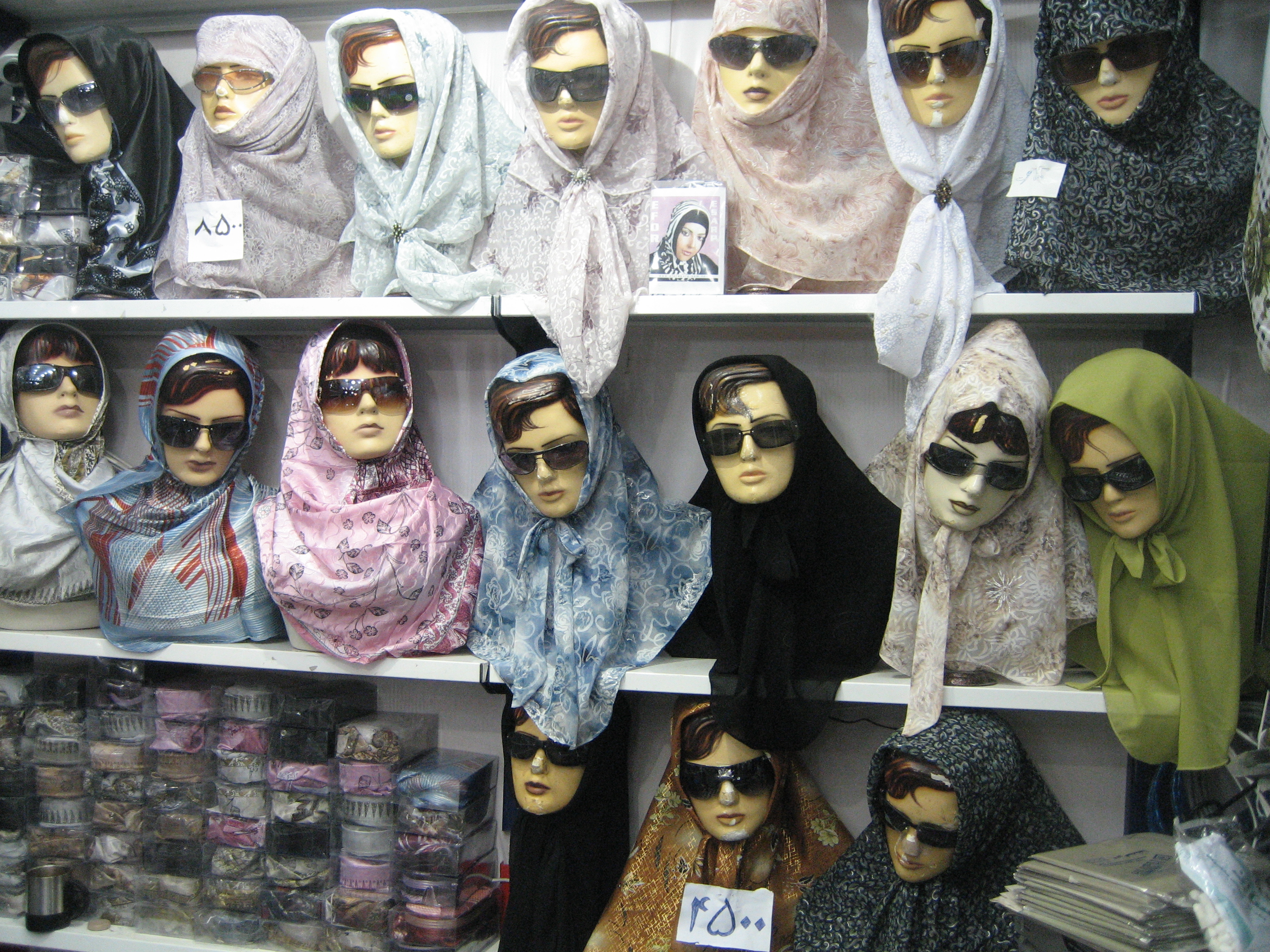
What to wear? (Photo credit:  Suzanne Anthony_

What to wear? (Photo credit: Suzanne Anthony)

“It was funny for me that the headscarf is a very powerful symbol that people fear. Women are asked to take them off in the US and women are asked to put them on there. We’re so focused on the power of a headscarf.” She remembers a gorgeous woman who stopped to ask her what she thought about wearing the headscarf and she answered, “I respect your customs and I’m willing to do it to visit your country. What do you think about it?” The woman wore a purple scarf, tossed it over her shoulder and said, “My god does not care about such things.”

On a visit to the holy city of Mashhad, all the women on the tour had to sport a chador, the black robe that covers you from head to toe. A bit freaky at first, they got over that feeling quickly when the Iranians looked at them and giggled. Blending in among a sea of black was an experience Suzanne had never had. She felt a huge energy shift. “All of a sudden you’re one of them now. You’re not the lone vanilla scoop in a chocolate sundae. You’re swept up in that mystique.”

The hospitality also blew her away. “They’d say, ‘Can you come to my house for tea?’ The whole Muslim culture is very much based around hospitality, that if you have a guest in your country it’s considered a gift. You’re considered a guest of honor.” These aren’t things we hear about in the media. Suzanne constantly met people throughout the towns she visited who’d say to her, “America very good.”

They’d also ask a lot of questions but there was one in particular that gave her a lump in her throat. “What does America think about us?”

“You don’t want to answer that question. So I just said people don’t know very much about you, they’re afraid of the government. One woman said, ‘Our government is crazy.’ And I said, our government is crazy too. They’d go on to say, ‘I hope someday our countries can be friends.’”

She went for the blue tiled ceiling but found so much more.  (Photo credit: Suzanne Anthony)

She went for the blue mosques but found so much more. (Photo credit: Suzanne Anthony)

Isfahan, with one of the largest squares in the world and a UNESCO World Heritage site, was her favorite city. Travelers flock there for the Iranian and Islamic architecture, art, history, and parkland. But it was the blue mosques that she couldn’t wait to see. “I’m just crazy about those because you go inside these mosques and the ceiling’s are all honeycombed. Just to walk through a giant mosque and have every surface around you in these blue and white tiles is just beautiful. I couldn’t seem to get enough of those.” She came to feel the same way for the mirrored mosques. She also fell in love with the city of Shiraz with its poets’ shrines.

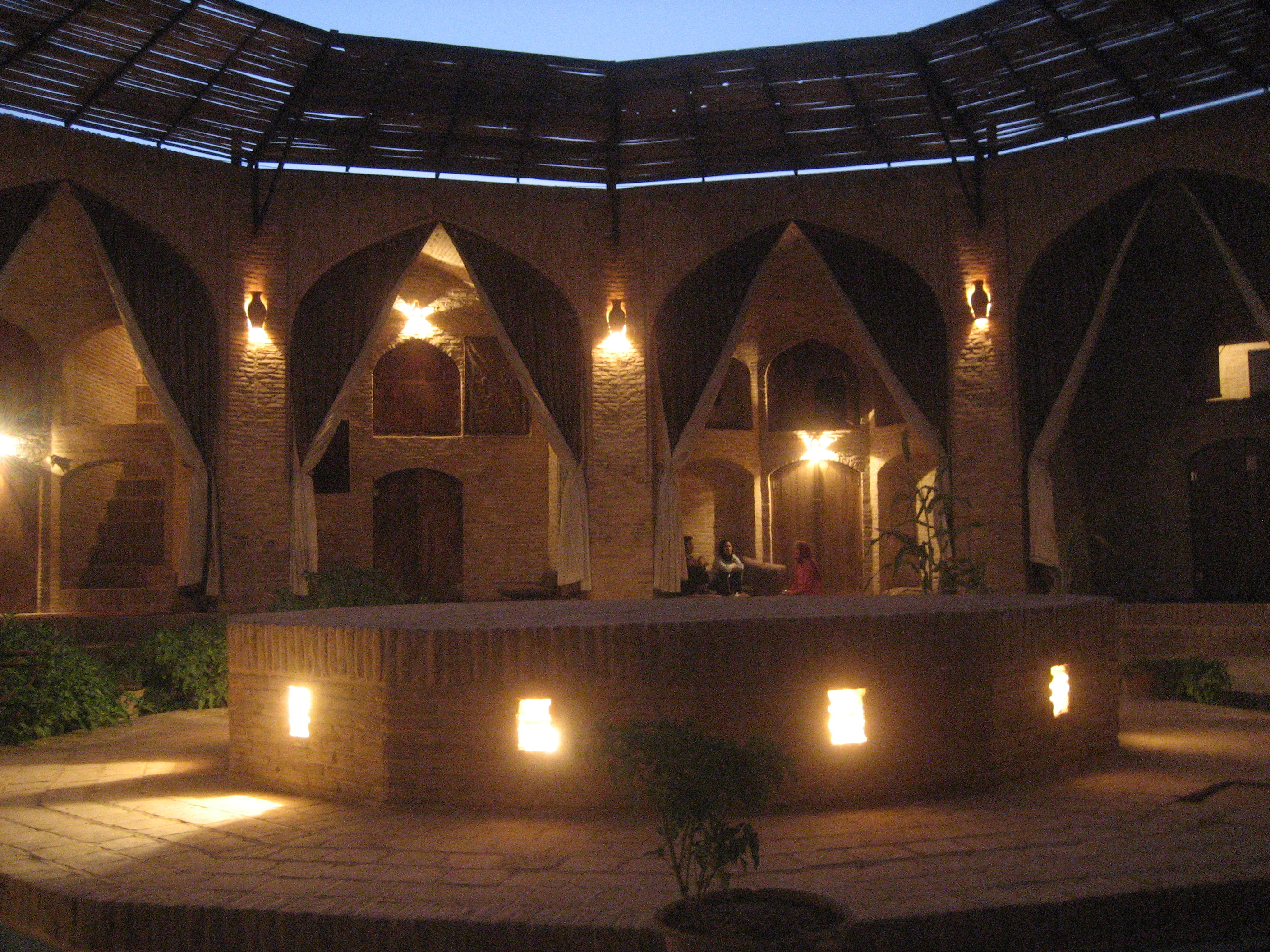
They visited a caravanserai, a sort of open-air dinner theatre in the desert. It turned into a wild and memorable experience when an Iranian tour group arrived and threw the party of all parties. “They threw upon the doors and dragged us into their party. Before you know it, we were all dancing. It was wild, the headscarves started to loosen and come off and everybody was on the dance floor. As quick as they blew in on their tour bus, they were gone and we were all stupefied. It was like prohibition. Here they were out in the desert and they were breaking all the rules.”

Oh what a night! The caravanserai courtyard.  (Photo credit:  Suzanne Anthony)

Oh what a night! The caravanserai courtyard. (Photo credit: Suzanne Anthony)

Suzanne thinks it would be an amazing thing for more Americans to visit Iran. Why? Because she thinks if you open up your mind and your heart, it’ll be an enriching experience like no other. “I was relieved to not have everybody be right who thought something bad was going to happen to me there,” she said. “Don’t be afraid of what you don’t know. Go and see it for yourself.” Another plus, women don’t have to pack much because nobody’s really going to see you!

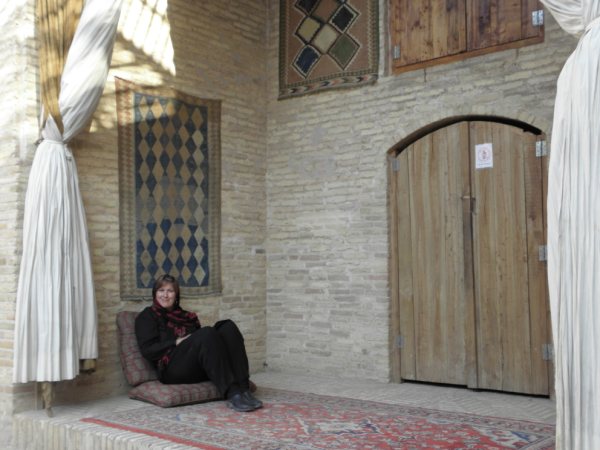
My nomadic soul sister, Suzanne.

My nomadic soul sister, Suzanne, chills at the caravanserai.

I’ve barely scratched the surfaced here. Visit Take To The Highway to get all the details behind Suzanne’s incredible journey in Iran and to follow her other trails.

Autumn In New York, We’ve Got You Covered.

A bird’s eye view of the Cloisters Museum & Garden in New York City.

October’s the time of year when New York’s Hudson Valley is teeming with weekend visitors who leave their urban boundaries to witness one of nature’s greatest displays, fall foliage. For anyone who can enjoy this scenery on off hours, good for them. For others, it’s often a painstaking experience as they sit in traffic along the highways and byways that lead them to this glory.

For those of us who can’t get away, or for anyone visiting the New York metro area, we’ve got some pretty nice displays of our own on tap. Some natural, some manmade, but all of which are pleasing to the senses. So if you’re local and feeling at all guilty about not heading north, don’t feel so bad. There’s plenty of good stuff right here.

Anyone bent on appreciating the jewel tones of fall need only to spend some time strolling through Central Park or Inwood Park in Manhattan, Prospect Park in Brooklyn, or Pelham Bay Park in the Bronx to get their fix. There are also loads of smaller parks throughout the boroughs with showy displays where you can walk, contemplate life and check out the local neighborhoods.

One of them is Fort Tryon Park where the Cloisters Museum and Gardens is one of the city’s most unique treasures. Spending the day among its medieval art, architecture and gardens is like being transported to another place and time. A branch of the Metropolitan Museum of Art, they offer events, talks, tours and exhibits that cater to all age groups. Sights & Scents at the Cloisters is a specially designed gallery program for visitors with dementia and their care partners. A current exhibit, The Forty Part Motet is a sound installation set in the Fuentiduena Chapel where visitors can experience an 11-minute immersion of Renaissance music. It closes on December 8th but I’m heading there tomorrow and can’t wait to experience it.

Fuentiduena Chapel houses the Forty Part Motet.

The Fuentiduena Chapel houses the Forty Part Motet.

The Raven, The Bells, Annabel Lee. These haunting pieces of literature make for great reading, but why not enjoy them by surrounding yourself with the works of the macabre master himself? Edgar Allen Poe: Terror of the Soul is the Morgan Library & Museum’s newest exhibit and explores the writer’s fiction, poetry and influence on his contemporaries. Located on Madison Avenue and 36th Street, you can easily pair a visit to the museum, followed by a walk down to Madison Square Park at 23rd street where you’ll find a delicious assortment of culinary pop-up food vendors that await your selection.

A tech talk at See/Change at the South Street Seaport.

A tech talk at See/Change at the South Street Seaport.

With the first anniversary of Hurricane Sandy fast approaching, there’s been a lot happening on a local level in and around New York City. I don’t typically spend time around the South Street Seaport in lower Manhattan but I recently passed through it. The last time I was in that area, all the restaurants, shops and businesses were shuttered because of storm damage. It was basically a ghost town. No more.

As of May, a group of like-minded folks from different walks of urban life saw the opportunity within a bad situation to improve the area for its residents, businesses, tourists, and the city. The result is See/Change and it has created a rebirth in this area and it’s a nice thing to behold. The October Fall Fest of events features music, a farmer’s market and pumpkin carving demos. Landbrot is partnering with the Seaport to celebrate Oktoberfest with their beer, brats and pretzels…yum. It’s the perfect way to spend a sunny weekend in the city. You’re out, you’re about, and even better you’re near the water.

So those are just a few things off the top of my head that are within an easy walk, train or bus ride throughout the boroughs.  If you can get away great but if not, we’ve got you covered.

Seeing the Awe, Not the Ugh.

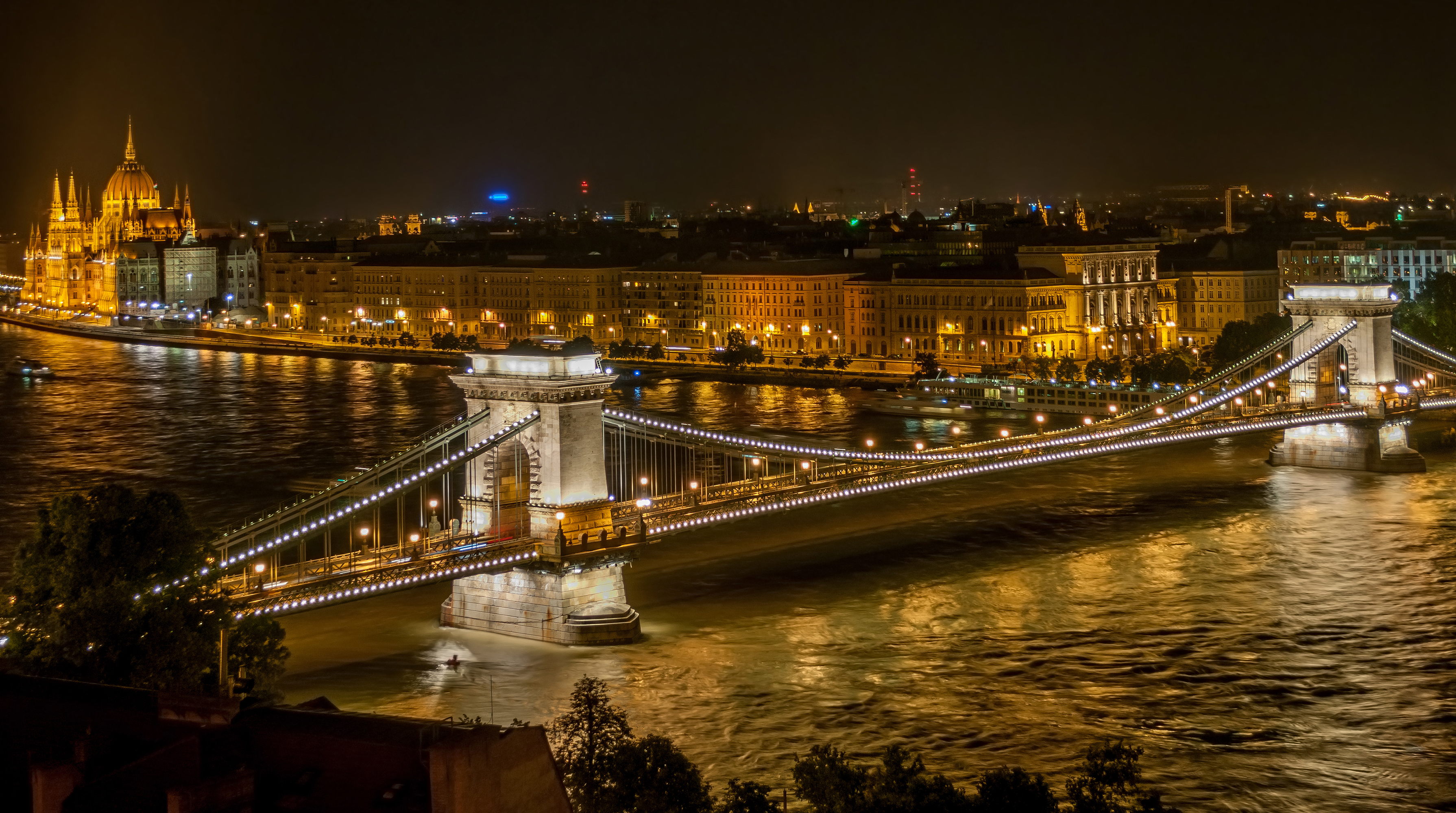
Take me to the river. Széchenyi Chain Bridge, Budapest.

Take me to the river.   Széchenyi Chain Bridge, Budapest.

Back in the fourth grade one of the assignments given to my class was to research the history of a country.  I wanted England.  I was nine years old and I was really into English novels and all things British.   England was mine.

The teacher passed a hat around and asked us to pick a folded slip of paper from it and pass the hat to the student behind us.  My turn came and I dipped my hand into the hat, closed my eyes and willed England.  Instead, I got Hungary and the only thought that went through my head was—you gotta be kidding me (actually it was something else).

I asked my teacher if I could swap Hungary for England.  She said, no.  She was the teacher, I was the student, and this was Catholic school.  Back then, no really did mean no.   So I had myself a little pity party on the way home, got over my bad self and sucked it up that I was stuck with a country that I had no interest in, much less to write about.

I thought of that experience recently when I met with a group of travel counselors to discuss the value of them writing about their travels.   Many of them don’t think that they can write or they’re uncomfortable with the idea of it.  For others, there’s no interest or they just don’t see the value in it.  I get it, it’s not what they signed up for, it’s not in “the box” that’s their profession.  Throwing foreign stuff into the game of what we do every day and what we think we know can be startling and icky.

Recently, I wrote an article about developing your skills and interviewed career coach Kathy Gonzales.  She told me, “The thing that repulses you has gold inside.”  What exactly does she mean by that?  Basically, that we put roadblocks in front of ourselves that might prevent us from seeing an opportunity.  We assign an “ugh” instead of awe to an opportunity.   She also offered this advice, “Do something that you don’t want to do. Do something that you’re afraid to do because in the process of doing that you’ll open yourself up to removing certain blocks, you’ll open up perspectives, and you’ll learn something new.  Mostly, you’ll learn something that you thought you knew but don’t know.”

I get that doing something you don’t want to do is uncomfortable.  I also know that travel agents who take the first step and put pen to pad will discover a world inside themselves they didn’t know existed.  They’ll see the gold.

I reluctantly researched Hungary and the more I learned, the more I burned with curiosity about the place.   I begged my mom to make goulash but that wasn’t happening in our house.   In the end, I turned in my paper and turned out an A+.  It felt good, I felt good, I was on fire.

Decades later, I found myself in Hungary gazing at the magnificent stone, Széchenyi Chain Bridge that reaches over the Danube River connecting Buda to Pest.  I felt a connection to this place.  I also remembered my stubborn, younger self.  Funny how things shake out.

Yea, sometimes we have to push ourselves kicking and screaming into doing something we don’t want to do it.  But try it.  Give yourself a chance.  You just may discover you’re on fire.

Sorry About Your Vacation But We’re Closed.

You're joking...right? (Photo credit: Laura Morales.)

You’re joking…right? (Photo credit: Laura Morales.)

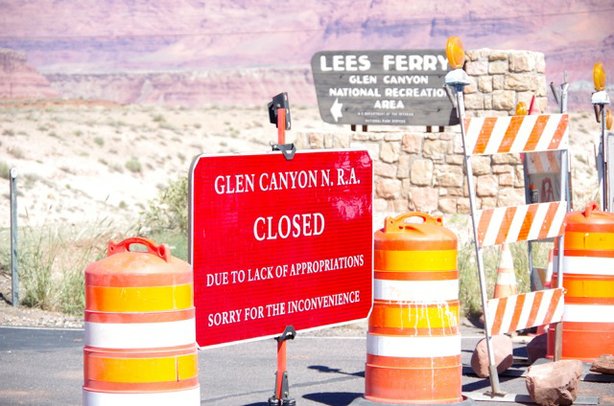
Yesterday my boyfriend asked me, “How pissed would you be if when we’d gone to Egypt they’d told us ‘sorry, the pyramids are closed today’?”  I don’t think I really have to answer that question.

But that’s how it’s gone this week for millions of tourists across the United States because of the federal government shutdown.  National parks, museums, and other famous institutions that draw visitors from across the U.S. and abroad are shut out from some of the most inspiring, natural, awesome, and thought-provoking experiences this country has to offer.  For the folks doing the traveling it’s been a major disappointment.  Sure, there are some who’ve made lemonade from the lemons of our government’s internal affairs, but for others the plans they’d had to visit the country’s federally run attractions have turned out to be a bust.

Travel advisors and tour operators who are politically aware may have had a jump on things by having a Plan B up their sleeve for their customers.  I hope so, anyway.   But for travelers who like to go it alone, what started out as an eager vacation has most probably turned into a frustrating experience and a poorer view of our government.  This especially holds true for any foreign visitors.

As of today, the government is in day four of its shutdown but there’s strength in numbers. Travel agents, the travel industry as a whole, and U.S. citizens can do something about it.

How?  All you need to do is write your federal representative.

Tell them how you feel.  Especially for anyone in the travel industry whose livelihood depends on tourism.  It’s that easy.

Power to the people, and to travelers.

Fall Into It.

Nankoweap Rapid is mile 52 along the Colorado River.

Nankoweap Rapid is mile 52 along the Colorado River.

If summer’s about escapism then autumn is all about back to business. But for many, fall is the time of the year when a lot of us hightail it out of here.   The crowds are gone, the roads are clearer and we can have places more to ourselves. But what’s travel without a good book? More specifically, without a good book about travel?

Depending on the direction you’re headed, some travelers prefer total immersion. And as most travelers know, any good travel tale is not without its fair share of ups and downs.  With that in mind, here are a few recommendations for all you travel advisors and travelers to inspire travel reading, travel writing, but mostly…travel.

theoldwaysI like a guy who likes to walk so I’m looking forward to The Old Ways: A Journey On Foot by Robert McFarlane. Shortlisted for the 2013 Warwick prize for literature makes it another good reason to pick it up. A literature professor, McFarlane leads us along the paths of the British Isles in England and Scotland, where he meets people and learns the history of these places. Step by step, he experiences the meditative bonus of walking, the thinking that goes with it and shares how exploring a country on foot is one of the best ways to enjoy travel. For anyone who’s hooked on their Kindle app and can’t get away, or for travel advisors who want to check things out, you can use Google Earth to track his path and see what he saw as you read along. Pretty cool.

Collection-of-Sand-Essays-Pe“…the most important things in the world are the empty spaces,” writes Italo Calvino. In one way or another, the 38 essays that make up A Collection of Sand focus on Calvino’s visual experiences and how they inform travel. Around his pleasures and fascination of maps and books and how certain places, in this case Japan, Mexico and Iran led to contemplation on space and time and civilization. Beautiful writing.


robberofmemoriesSeems only fitting that since there’s a chill in the air that you should have something chilling in your hands, or on your iPad. In which case, The Robber of Memories: A River Journey Through Columbia may be right for you, especially if you’re heading in that direction. Michael Jacobs takes us with him on his adventure up Magdelena, a river that runs through the heart of Columbia where he charts its course geographically and emotionally. Like most first-world travelers who go it alone, he sheds himself of life’s modern comforts. His journey is challenging and dangerous but his tale, where South America is the central theme, serves up a different perspective altogether.

alexandriaEgypt might not be the first place you think of going to these days but that doesn’t mean you can’t get a taste of what it once was. A long time ago, in a land far away, an old flame turned me on to The Alexandria Quartet by Lawrence Durrell and this masterpiece has stuck with me ever since. Made up of four small novels, it’s a lush and seductive tale of friends and lovers in Alexandria before WWI. Its central theme is love conveyed across the different viewpoints and experiences of the characters that make up these stories and whose common ground is the city.

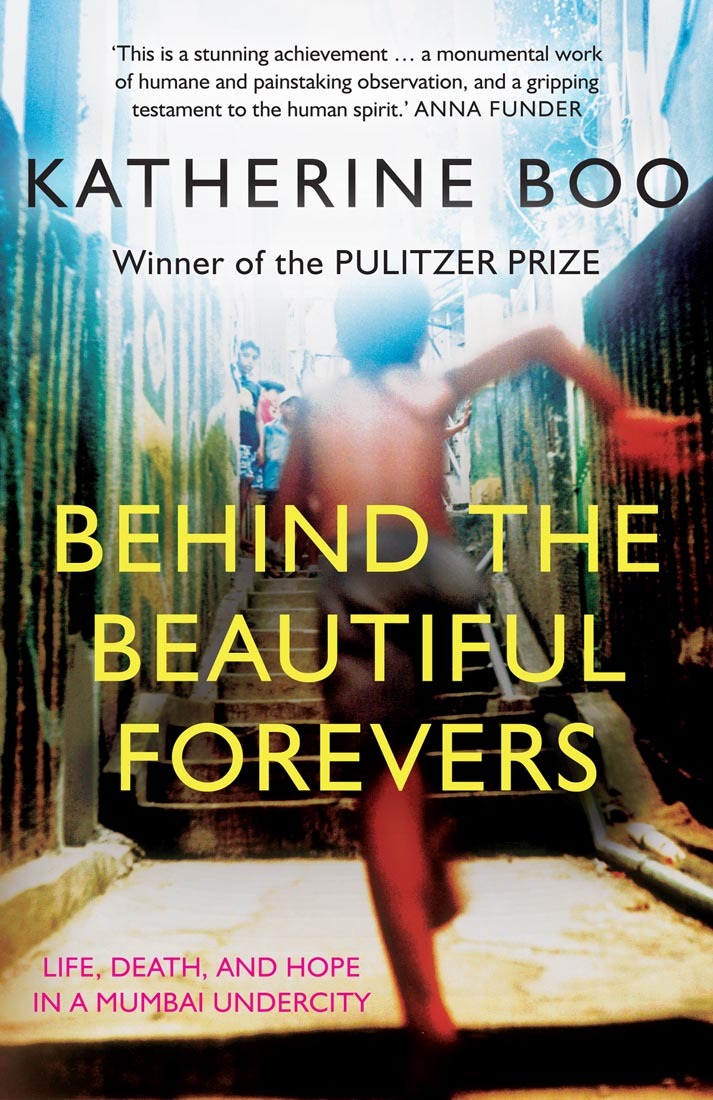
BehindBeautifulForeversBehind The Beautiful Forevers: Life, Death and Hope in a Mumbai Slum by Katherine Boo. I suppose the title pretty much sums up it up but don’t let that get you down. Boo won numerous book awards for this story and any traveler worth their salt knows that the closer to the bone you get to living in a country, the sweeter the meat. A journalist for the New Yorker, Boo takes us into the slum of Annawadi and its underworld of characters that make up the citizens who do what they can to make a life for themselves and their families who live on the other side of life in the shadows of shiny corporate hotels.

urbancircusAnother glimpse into the lives of others, The Urban Circus: Travels with Mexico’s Malabaristas by Catriona Rainsford takes you on a wild and wacky ride. Rainsford joined a group of young, itinerant street performers on a two-year journey across the country where she learned to live hand-to-mouth with them. If you’ve ever been to Mexico, this true story will give you a chance to see beyond the tourist zones and into the everyday lives, genuineness and character of Mexicans.

If you’re into adventure travel, or have customers who live for it, then this gripping and heart-stopping story is the perfect companion. The Emerald Mile: The Epic Story of the Fastest Ride in History through the Heart of the Grand Canyon by Kevin Fedarko is the harrowing tale of three guides who ride the Colorado River through the heart of the Canyon.  Check it out:

There’s loads of stuff out there. Are you reading any good travel stories these days, fiction or otherwise? Let me know, I’d love to hear about them.