Author Archives: portsarecalling

Our Asian Adventure Aboard the Crystal Symphony Continues…

China-Xiamen-sunset-in-Gulang-yu-island

Guest blogger Robyn Bushong sets sail for Xiaman.

Today is Palm Sunday, April 13th. Hard to believe Cynthia, my travel buddy, and I have been “home” on the Crystal Symphony now for three days.

We sailed from Hong Kong’s Victoria Harbor late Thursday, evening, April 10th and had a welcome sea day on the 11th, followed by a whirlwind visit to Xiamen yesterday. When we first boarded—after our 3+ days of travel and non-stop marathon sightseeing tour of Hong Kong—we were welcomed like family and that’s exactly how we felt. Our embarkation was efficient, taking all of five minutes. In our beautiful stateroom on the Penthouse Deck (Deck 10), we unpacked, met our Austrian butler, Rainer, and our cabin stewardess Monika. After a quick tour of the ship, we enjoyed a very light dinner and were early to bed.

(Photo credit:  R. Bushong)

Our home away from home. (Photo credit: R. Bushong)

The first day of boarding, I couldn’t wait to get up to the Lido Café and sit in my favorite “spot,” a window table for two, where my dear friend Dorothy and I had sat for breakfast every day on our 13-day Trans Pacific cruise in December 2012. How nice that three of the dining room staff remembered us! Keeping with the routine from previous cruise, it was up to the gym and a good work out. What a nice surprise that Brian, the fitness director and spin instructor, remembered me, too. Friday was a sea day and everyone seemed glad to leave behind the hustle and bustle of Hong Kong and just relax. And what a superb place to relax—every amenity is at your fingertips. The service is superb but unobtrusive. The staff prides themselves on making you feel as if you are the ONLY guest onboard. It’s hard to describe: atmosphere is casual but classy. The food, in all venues, is exceptionally good with great variety and selections. Housekeeping-– some of the very best you could ever expect to find anywhere.

I think one of the best ways to describe the relaxed ambience on this gorgeous sunny, breezy day was to watch the guests stretched out on lounge chairs, their favorite beverage at their side, book in their hand and they’re half asleep and half reading. All the while listening to a great sextet at the pool playing Santana-style music.

Saturday we docked in Xiamen. Also known as the “Pearl on the Sea”, Xiamen is a gorgeous tropical seaport that is also the second largest city in China with a population of 3 ½ million. Other than Victoria, BC, I don’t recall EVER seeing so many tree-lined esplanades, a kaleidoscope of color at every corner and a park every 500 meters. Unbelievably beautiful! My observation of sanity with traffic and pedestrians in Hong Kong was just the opposite here. The traffic on this Saturday morning was beyond indescribable. No sooner had we boarded our motor coach for a 4-hour tour, and we knew we were in for a wild ride. Our driver was fearless. Everyone jaywalked; pedestrians competed with giant buses for the right of way and bedlam ensued.

A delightful young lady, a graduate of Xiamen University, conducted our tour. We’d read in our daily bulletin that our guides would be university students with limited English. This young lady, whose English name was “Theona,” gave 110% to making our tour interesting. The problem was that with thousands and thousands and THOUSANDS of visitors at our first stop—The South Putuo Temple—that we just had to observe, as it was impossible to hear. I don’t ever remember there being so many people in one place as at this temple. (It’s interesting to note that South Putuo, or Nanputuo, is a very famous Buddhist temple founded in the Tang Dynasty (618-907.) Of the many beautiful temples in Xiamen, this is by far the most famous. It is so named because it is south of the Buddhist holy site Mount Putuo in Zhejiang Province.

DSC_5238

(Photo credit: R. Bushong)

Afterward, we visited the Overseas Chinese Museum. This 3-level museum, filled with over 15,000 artifacts, highlights the history and happenings of Chinese who went abroad to work and live. One of the most interesting accounts is of those Chinese immigrants who made a major contribution to the US’s Transcontinental Railroad in the mid 1800s. (These immigrants worked long hours in severe conditions for minimal pay to help build the tracks across 1,800 miles of arid plains and deserts and the rugged granite walls of the Sierra Nevada and Rocky Mountains.) Only suggestion: it would have been so helpful to English-speaking visitors to have had access to a brochure in English, since several of the major exhibits related to these immigrants’ lives in both the USA and Canada. Our tour concluded with a tea-tasting ceremony of five different varieties for our group of 34 at a government-run teahouse. Once back on board, our busy day in Xiamen concluded with a concert in the Galaxy Lounge by internationally acclaimed pianist, Tian Jiang. Outstanding.

(Photo credit: R. Bushong)

(Photo credit: R. Bushong)

The next day was foggy and extremely windy. In fact, the promenade deck doors were blocked for exiting outside because of the wind.  A plethora of cultural enrichment opportunities, ranging from a hands-on cooking demonstration by a guest chef in the Starlite lounge, to a fitness Boot Camp, to “Movie Editing Made Easy” where you can learn “iMovie Basics Part 1” on your iPad, highlighted the ship’s activities options. Today’s lecture by World Affairs Lecturer, Sir James Hodge discussing “China Today; the Giant Awakens” was mesmerizing.” Highlights of his talk: “China can now produce more in two weeks than it used to produce in a year.” Currently 18 million Chinese belong to the Communist Party, with 20 million wanting to join each year. Pork is the preferred meat. There are over 600,000 different villages in the country, 55 recognized ethnic minorities within 110 million inhabitants and 300 local dialects!” And that’s just the beginning of what I learned in an hour.

Guest chef demonstration.  (Photo credit: R. Bushong)

Guest chef demonstration. (Photo credit: R. Bushong)

Tonight, we look forward to dinner at Prego (the popular Italian specialty dining venue) with our new friends we met yesterday from Dallas. Tomorrow, we dock in Shanghai, to enjoy three days/two nights of sightseeing and culture.  Our Asian adventure aboard Crystal Symphony continues…

HONG KONG… Our Asian Adventure Began Here!

Guest—and first time—blogger Robyn Bushong travels to Hong Kong, and Ports Are Calling is happy to feature her posts as she sets sail.

We arrived in Hong Kong as first-time visitors only to be greeted with torrential rains and dense fog. Welcome to Hong Kong! But the pouring rain didn’t dampen our enthusiasm for the adventure that lay ahead. My dear friend Cynthia and I had just completed 21+ hours of travel from Galveston, Texas to begin our Asian adventure aboard Crystal Cruises’ Crystal Symphony “Pearls of China, itinerary that was to begin in Hong Kong, April 9th, with calls in Xiamen, Shanghai (two overnights), Dalian and then concluding with a three-day land package in Beijing on April 21st.

We were met by our private guide (who we had arranged through the Hong Kong Tourism Board) and taken to our hotel –The InterContinental. Highly recommended as the property is located directly on Victoria Harbor and the unobstructed view from our room: Simply Spectacular! First order of business upon arrival at the hotel was lunch and to review our priorities for sightseeing in this intriguing and enticing city. Since the hotel’s specialty restaurant, Yan Toh Heen, featured dim sum, we eagerly chose this venue and learned it was a recipient of a “1-Michelin Star.” Our guide ordered for us and the quality and presentation was outstanding. As we concluded our fine lunch, we told our guide we wanted to walk since the rain was subsiding, as we were ready to see, do and experience everything possible in the time we had to enjoy this exciting, world-class city.

The InterContinental's night view.

The InterContinental’s night view.

We headed to the Star Ferry for the 10-minute ride between Kowloon (where our hotel was) and Hong Kong. A friend who handles tours in Hong Kong had set our priorities for sights: First and foremost, take the tram to the top of Victoria Peak. Next, see the Financial District, Hollywood Road, Man Mo Temple and browse the fine shopping district; enjoy dim sum (check!) and experience the Stanley Street Market.

With all the trees, dramatic and colorful flowers, and gorgeous landscaping, Hong Kong’s “green space” was amazing. What was also amazing were the hundreds and hundreds of tourists out and about on this rainy Tuesday afternoon. What we learned was that the previous Saturday (April 5th) was a national holiday: Tomb Sweeping Day. In Chinese it’s Ching Ming – which literally means “Clear and Bright” and is a tradition where families travel to their family tomb to sweep, clean and place flowers or other memorials on the gravesite. Because the national holiday fell on a Saturday, the banks/financial institutions were closed on Monday and apparently many people added an extra day to their holiday weekend.

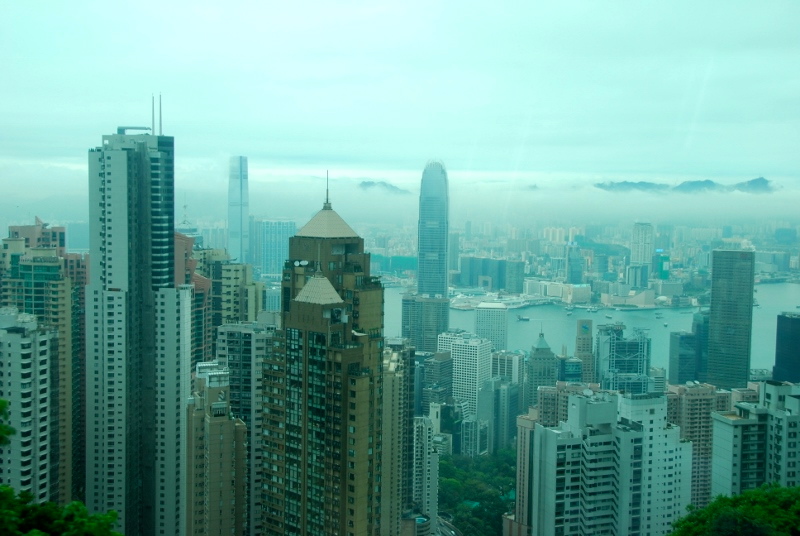
We walked through the Financial District and the IFC (International Financial Center), and passed such fine stores as Prada, Salvatore Ferragamo, Piaget, Rolex, etc. As we headed towards the Peak tram station, we passed St Andrew’s, an elegant Anglican Church (Episcopalian) and the historic St. John’s Cathedral completed in 1849. Then we boarded the tram for the ride to the top of the Peak. The trams, which have been operating for over 125 years, hold 120 people each and run about every 8 minutes. Following the brief—albeit very steep—ride to the top, we arrived at an incredible sight. Our friend was right: Standing on the top of Victoria Peak and looking down over the entire city…WOW! While we were walking around, a volunteer greeted us with a complimentary headset device that provides a detailed overview of the area. We had wanted to do the 90-minute walk around the perimeter of the peak, but it started raining again so we departed.

A rainy view from top of Victoria Peak.  (Photo credit:  R. Bushong)

A rainy view from the top of Victoria Peak. (Photo credit: R. Bushong)

After we took the tram back down, the rain had stopped again and we walked to Man Mo Temple. Built in 1847, the temple is one of the oldest traditional-styled temples in Hong Kong and is dedicated to the gods of literature (Man) and the god of war (Mo). From there, we stayed on Hollywood Road to view some of the city’s most beautiful antique shops and fine jewelry stores. To ensure we got a bit more immersed in the local culture, our guide suggested we take the subway to the Temple Street Market area. Living in Texas we’d never experienced anything like this before. Crowds on the New York City subways couldn’t hold a candle to the throngs and throngs and throngs of people traveling in all different directions in Hong Kong’s subways. Everyone had an electronic device in their hands. And how these commuters could maneuver from one escalator and subway car to another—while seemingly never taking their eyes off their cell phone—was simply incredible. From there, we worked our way along the busy streets of food vendors, pastry and coffee shops, neighborhood grocery stores, drug stores, camera shops, and other small, neighborhood businesses. Food vendors sold fresh crabs, fish, lobster, and “internal organs” of other creatures cooked to order, and served on a skewer with hot and spicy sauces. As we observed the frenzied pace at which everyone was moving, our guide told us that since most locals work from 9am till about 7pm, we were right in the middle of the prime rush hour pedestrian traffic.

Downtown Hong Kong bustles.  (Photo credit:  R. Bushong)

Downtown Hong Kong bustles. (Photo credit: R. Bushong)

We kept moving along the bustling streets, heading towards Temple Street Market. Once there, we were amazed at the stalls—everything from cheap watches, imitation leather goods, jewelry, silk scarves, t-shirts, shoes, camera and electronic equipment, toys and souvenirs. Our guide told us that the market is only open nights from about 6pm-midnight. Each of these hundreds of vendors packs up their wares at night, only to set-up again the next evening. What a hard way to earn a living. We didn’t buy anything, but were glad we saw the market. From there, we took a taxi back to the hotel, bid our guide farewell, and at 8pm on our first night in Hong Kong… we were DONE!

The next morning we awoke early to gorgeous sunshine and an indescribably beautiful skyline. As we ate breakfast, we watched the buildings come to life as neon signs lit the skyline starting around 7am. We were to board Crystal Symphony early that afternoon, so we had time to do a little shopping and sightseeing on our own. We set off on a leisurely walk through the streets near our hotel to shop and later enjoyed lunch at the world-renowned hotel, The Peninsula. We didn’t realize at first just how close we were to the Ocean Cruise Terminal as it was only a short walk from our hotel. We also learned that Hong Kong had recently completed a new terminal, but that it was miles from the city centre. Ocean Terminal, where Crystal Symphony was docked, showcased multi levels of retail shops offering everything from Gucci to Nike and all literally just footsteps from where we were to board our ship. What a great way to start a cruise.

Awesome view from our balcony on the Crystal Symphony.  (Photo credit: R. Bushong)

Awesome view from our balcony on the Crystal Symphony. (Photo credit: R. Bushong)

I also just learned that Crystal Symphony will return to Hong Kong during the holidays for a 15-day “China Sea Holiday Spectacular” (December 21- January 5, 2015), and will be docked at Ocean Terminal during the New Year’s Eve celebration. Can you imagine what an experience that would be to see one of the world’s most spectacular fireworks displays light the skies over Victoria Harbor—and all to be enjoyed from the prime vantage point of a balcony or deck aboard the ship!

Well, we’ll be boarding soon and our Asian adventure aboard the Crystal Symphony…it’s just about to begin!

Golf, Getting Into the Swing of Things.

Augusta.

Augusta.

This weekend starts the first of the four major championships that revolve around a little dimpled white ball. Cherry blossoms may herald spring but so does The Masters Tournament, held annually at Augusta National Golf Club in Georgia. It’s the only major tournament held at the same course each year. Why? I have no idea…you’ll just have to ask a golfer. Mark Twain once said that golf is a good walk spoiled and while I tend to agree with him, there are plenty of folks who’d gladly argue that point over 18 holes.

Listening to the Masters on TV, broadcasters speak in hushed tones and a whispered reverence normally reserved for church as they profile everything from a golfer’s background to the state’s iconic magnolia blossoms. From a live perspective, I don’t really see how spectators can glimpse that little ball as it flies through the air but I guess that’s what passion’s all about. And I suppose that after watching the pros go at it for four days, the desire to hit the links and pull out your Big Bertha is just too overwhelming. So if you’re itching to get out there—and get away—here are a few budget friendly destinations to put you in the swing of things:

Mirimichi
Memphis, TN
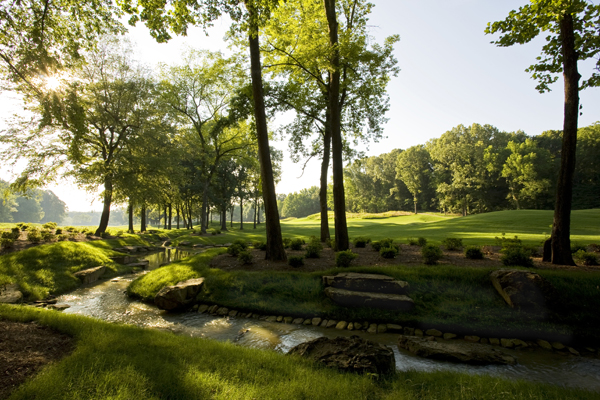
This southern city may be renowned for its blues and barbecue but the addition of Mirimichi golf course in 2009 provided another reason to visit the land of Elvis. Native son Justin Timberlake did the right thing when he invested $16 million on revamping an existing golf course in his own backyard, turning it into a state-of-the-art, environmentally friendly property. He also kept prices low, making this public course user-friendly for locals while encouraging tourism at the same time. Mirimichi was ranked the #1 golf course in the U.S. in 2013 by Golfweek magazine and is also the first golf course in the U.S. to receive official Audubon Classic Sanctuary certification by Audubon International, a non-profit environmental education organization.

Another good reason to go to Memphis.

Another good reason to go to Memphis.

Torrey Pines Golf Course
San Diego, CA
As the song says, it never rains in California and with pretty much perfect weather all year round, San Diego is a traveler’s dream. Its spectacular scenery, nightlife, and dining options make it a hole-in-one destination for most travelers but it’s the municipal greens in La Jolla at Torrey Pines that make this destination a paradise for golfers. Yeah you might blow a bit more cash on this trip but it’ll be worth it for the five diamond experience and panoramic views you’ll get at the Lodge at Torrey Pines when you book a Signature Package that includes two nights and a chance to play on the course that hosted the 2008 US Open and which has been chosen to host it again in 2021.

A captivating course at Torrey Pines.

A captivating course at Torrey Pines.

Salish Cliffs
Shelton, WA
My British friends who live in the US have no problem going to play golf when there’s a chance of rain; they know they’ll have the course all to themselves. If you’re of the same spirit then you may want to consider a flight to Seattle. Most people may not think of The Evergreen State as a golf destination but Salish Cliffs is changing all that. Part of Little Creek Casino Resort, this property offers inviting stay and play package discounts where you’ll golf in a pristine wilderness area of the Pacific Northwest. The hotel’s amenities include Seven Inlets Spa, which has a robust menu of treatments and entertainment at the Skookum Creek Event Center that often includes headline acts. After a few days of golfing, head into the Emerald City and explore all its unique offerings.

The 17th hole at Salish.

The 17th hole at Salish.

Tobacco Road
Sanford, NC
Golfers are spoiled for choice in North Carolina, as anyone who’s ever spent time swinging balls down there knows. Tobacco Road has earned its place as one of the top 100 public golf courses in the U.S. by Golf Digest and Golf Magazine and it also ranked as one of the top 50 in the world by Golf Course Architecture Magazine. With its gorgeous greens, friendly rates, proximity to 30+ other courses, and southern hospitality, what more could you want from a golfing weekend. Check out Tobacco Road Golf & Travel to see all the options within this destination.

The view above the Road.

The view above the Road.

The Algarve
Portugal
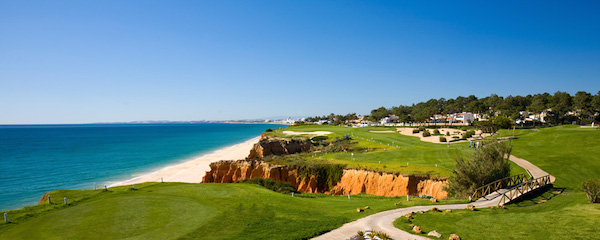
The International Association of Golf Tour Operators voted this southern region of Portugal, Europe’s Best Golf Destination for 2014. The Algarve beat out such heavy hitters as the Scottish Highlands, the French Riviera, and Central Ireland. Portugal is one of the few affordable European countries where you can stretch a dollar, offering yet another reason to consider putting this trip at the top of any vacation plans you may be working on. If golf’s your game then you don’t need me telling you where to go in the Algarve…you’ll figure it out but click here for some sweet recommendations.

Vale do Lobo,

Vale do Lobo, just one of the many courses in the Algarve.

Any good courses in your neck of the woods? Share the wealth and drive some travel there!

For D.H.P

Cherry Blossoms, It’s Poppin’ Time.

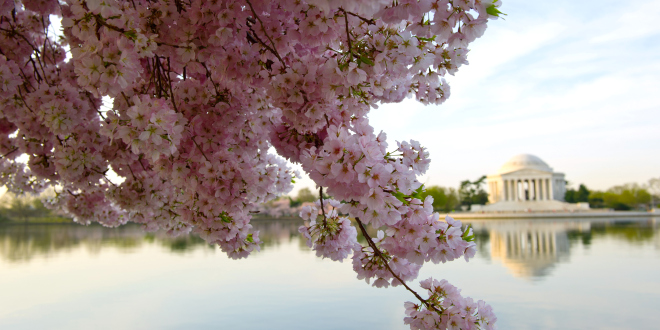
US-FEATURE-CHERRY BLOSSOMSIt’s April and that means it must be cherry blossom season. Nothing says spring like these glorious trees and even though there’s still a chill in the air, I’m going to trust Mother Nature to make one of her finest appearances when she’s ready. After the drudgery and darkness of what seemed like the longest winter in ages, when these buds burst in shades from the softest white to the deepest pink and reach full blossom, the world just looks a whole lot brighter. Few things are more delightful than lying under a cherry blossom tree, its pinky petals swirling a magical snowstorm around you.

I’m crazy for cherry blossoms and crazier for them because of the travel they inspire. If you’re looking for a good reason to get away, I’m giving you one. Washington, D.C. may showcase the grand dame of cherry blossom, or sakura, festivals in the U.S., and a trip to the nation’s capital never disappoints, but there are plenty of other places around the country to be in their good company. So if you’re looking for a day trip, weekend getaway, or something a bit longer, figure one of these destinations into your plans and don’t forget the camera.

Essex County Cherry Blossom Festival
Branch Brook Park, NJ

April 5-13, 2014
Cherry blossoms are the crowning glory of this town and Essex County takes great pride in these trees.  Locals and visitors pack this park to take part in a 10K run through the cherry tree groves, bike race in the Cherry Blossom Challenge, or enjoy a number of other events. Vaux and Olmsted, who designed NYC’s Central Park, conceived the design for this park so visitors are in for a treat.

Essex County Branch Brook Park, NJ April 5-13, 2014

The pride and joy of New Jersey’s Essex County.

Vancouver Cherry Blossom Festival
Vancouver, British  Columbia
April 3-28, 2014

Vancouver came late to the cherry blossom garden party but after their first festival in 2006, the city’s been attracting visitors to this extravaganza ever since. The festival’s organizers believe so strongly in the power of the beauty of these blossoms to unite people, that their purpose behind this annual event is simple—to embrace citizens of all ages.  Yet another great reason to visit Canada.

Vancouver's very cherry trees.  (Photo credit: Richard Greenwald)

Vancouver’s very cherry trees. (Photo credit: Richard Greenwald)

International Cherry Blossom Festival
Macon, GA
March-April

Cherry blossom season peaks early in Georgia, with these natural debutantes making their entrance in March. No worries, festivities run through April and because this town is the cherry blossom capital of the world, visitors can reap the benefits long after the crowds have gone.

Southern bells.

Southern bells.

Subaru Cherry Blossom Festival
April 2-13, 2014

Philadelphia, PA
The City of Brotherly Love, karaoke, and cherry blossoms—it doesn’t get much better than that!  A project of the Japan American Society of Greater Philadelphia, the Subaru Cherry Blossom Festival is an engaging cultural celebration with events like Dine Out Japan, musical and dance performances, sushi making classes, martial arts and loads more.

Philly's festivities await you.

Philly’s festivities await you.

Sakura Matsuri,Brooklyn Botanic Gardens
April 26-28, 2014

Brooklyn, NY
Brooklyn Botanic Garden’s CherryWatch Blossom Status Map predicts the first tree to bloom next week and Brooklynites can’t wait.  Held the last weekend of April, the Sakura Matsuri is an entertaining celebration of Japanese culture, including a traditional kimono fashion show.  The garden will be buzzing that weekend, so if you’d like to avoid the crowds and have the view all to yourself, plan an off visit during the week.  No matter when you go, make a day of it by visiting the Brooklyn Museum, located next door.

Blossoms and more are in the house in Brooklyn. (Photo credit: Wesley Rosenblum)

Blossoms and more are in the house in Brooklyn. (Photo credit: Wesley Rosenblum)

You don’t need to visit a festival to enjoy these blossoming beauties.  They’re easily found along esplanades, in most parks, and sprinkled throughout neighborhoods that have cherry blossom friendly climates.  All that’s required on your part is to gaze up and enjoy their pink but fleeting loveliness.


Even Bishops Do It.

Salisbury, England.

Salisbury, England.

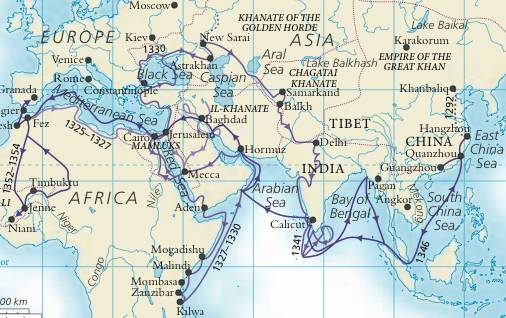
Ibn Battuta, a 14th century Moroccan explorer, wrote, “Traveling leaves you speechless, then turns you into a storyteller.” Considered one of the greatest travelers of all time, accounts of his journeys were published in the Rihla.

I'd like to follow in his footsteps.

I’d like to follow in his footsteps.

Two weeks ago while roaming around online looking for some spiritual inspiration, I came across Huffington Post’s live Lenten blog. I wasn’t looking for any religious instruction but what I discovered was an inspiring, travel related, surprise.

If you’re unfamiliar with Lent, it’s the 40 days of observance, beginning with Ash Wednesday, leading up to Easter, and probably the most significant and spiritual season for Christians. It’s a time of repentance and fasting. In the self-denial department you can go big or small but chocolate, desserts, smoking, dieting, cursing—these are usually the big ones on the Lenten hit list. And that’s how I came across Bishop Edward Condry of the Diocese of Salisbury.

Salisbury's most famous house draws loads of visitors.

Salisbury’s most famous house draws loads of visitors.

Forget the sweets. The Bishop went big and put some thought into his Lenten challenge by ditching his car and committing to serve his rural community by bike, by foot, and limited public transportation. Granted, he is an avid biker but anyone who’s ever visited a city in England like Salisbury knows it’s not easy to traipse around from one end to the other without a car, but the bishop was intent on doing this for several reasons. The first is for the traditional Lenten observance of fasting, the second is to call attention to climate change, and the third is to be more respectable of nature’s gifts and resources.

The coolest thing is, he’s blogging about it daily.

And that brings me to travel. Specifically to travel agents and travel ambassadors everywhere. Every place you go, including your own backyard, is an opportunity to share your experience. The bicycling bishop may be pedaling around town inspiring others through his unique choice of Lenten observance but his travels are generating ideas and he’s finding inspiration to write about them.

Because that’s what travel does, it generates ideas. Towards people, food, wine, arts, fashion, architecture, sports, culture, politics, the environment, or religion. No matter how near or far we travel, it stimulates us in some way. Bishop Condry was stimulated by his faith to look around and approach abstinence in 2014 from a different perspective. The view from his handlebars stimulated him to write about it.cropped-ed-cycling-email

If you’re not used to writing it may feel a bit daunting at first, as in—who am I to write about this? But I’d ask—who are you not to write about it? I have a feeling the bishop would ask you the same thing.

Once you brush your fear aside and get your thoughts on the page you just might discover that you have a lot to say. You can start as big or as small as you like. There are no rules, so don’t make any. Bishop Condry didn’t.

In this world of user-generated content, travelers everywhere contribute to thousands of travel sites. If you’re afraid to take a big leap, start small. Sites like Facebook, Instagram, Pinterest, Vimeo, are great outlets to share your travel experience through words and photos. Just find the one that works for you. Skittish about social media or afraid to click the publish button? No sweat, just break out the old pen and paper, it works every time.

Travel agents who might think there’s no way they can write just might surprise themselves. Speak with your owner or manager about doing a piece on your next trip and publishing it on the company website. If your agency has a marketing department, ask a colleague for guidance to help craft it.

ed-static-with-lock-emailBishop Condry’s goal is to clock 2,000 miles without a car and he’s halfway there. His daily blog posts are musings on his Lenten experience, and about nature, wet clothing, climate change, the people he meets along his travels, and about transportation. Through this observance he’s discovered a few new ways to spread the good word and share it. He’s certainly inspired me to ride and to write. The man is one cool dude.

Whether you hop on a bike or a plane, take a page out of the bishop’s book. Don’t be shy.

Interested in riding along with the Bishop Condry? Click here.

Wandering In Whitstable.

Whitstable's beach huts.

Whitstable’s beach huts.

The steely green water dragged millions of small rocks and shells back into the ocean, sounding like a stylus at the end of a record that keeps going around and around. A thin and wispy cloud blanket crossed a cobalt sky and seagulls soared and dipped. Their screeching echoed across the beach. Behind me a row of pretty beach cabanas, each one named and painted a bright and different color sat locked and waiting, like debutantes itching to get to the ball. I was in Whitstable and even though it was March in England, I was happy as a clam to be on a shoreline.

Spring came early to Southern England this year and the counties around London are beaming. Daffodils and their cheerful faces greet you from front walks and along the motorways. Here on family business, I had a free day before flying home and as much as I’d have liked to roam around London, I wasn’t up for being around crowds. Staying in Hertfordshire, a northern suburb of London, I was looking for a place that wasn’t too much of hike but far enough that it would feel like I’d gone away. I stumbled upon Whitstable, a beach town on the north coast of Kent known for its seafood. Just over an hour by car, it was the perfect getaway so off I went.

The drive south along the M25, to the Dartford Bridge Crossing, to the M2 was a breeze. I suppose it being late morning on a Thursday might have had something to do with it. The sun was blazing, the windows were down and the borrowed car had a Hollies cd in it, so, really, what more could you ask?

Horses grazed along the shamrock green hills that rolled along either side of the motorway and cherry blossom trees stood out like cotton candy amongst gloomier neighbors. Manicured rows of apple orchards and other fruit farms made for a pretty journey and before long I was turning off towards Whitstable.

Within minutes I was driving along the high street towards the harbor, passing flower shops, bakeries, interior design stores, galleries, pharmacies, and all of the traditional goods needed for everyday living. It was a relief to be in a town that hasn’t been malled by big box stores. Before you reach the seaside, there are loads of little hotels, restaurants and cafes. It’s a bustling street and with its proximity to London once the summer season opens it must be jammed. As much as I’d have liked to stroll around, with only a few hours to spare the ocean was calling.

Wonderful Whitstable. (Photo credit: D. Powell)

Wonderful Whitstable. (Photo credit: D. Powell)

Crunching along the gravely beach, I picked through oyster shells bleached white by the sun and the tides. Tiny nautilus, other baby seashells, and smooth rocks in hues of blue to pale gray carpeted the beach like confetti. Heading west along the paved shore promenade, locals walked their dogs, and bicyclists and joggers did their thing. Inspiration to get off the couch just might be easier in this stretch of paradise.

Fresh good stuff.

Fresh good stuff.

Low slung hotels and “rooms to let” with ocean views are sprinkled all along this coastline and even though it wasn’t high season, this part of Whitstable seemed quieter. I found Jo Jo’s, a café with lots of yummy food, ordered a honey pistachio cake and coffee, then made myself at home on the patio at a weather-beaten wooden table, smiling at the superb view. It was a slice of heaven, this Whitstable. Moments later a waitress asked some locals at the next table, “Who ordered the fish finger butty?” All I could think was—I wish I did! This sandwich, a comfort food for Brits of all ages, is traditionally made with cooked frozen fish fingers and placed between two slices of bread but what was being served here was all grown up. Battered pieces of fresh haddock with arugula on a golden roll had me rethinking where I’d eat lunch.

A grotter.

A grotter.

Harvested since the Romans set up shop in England, Whitstable is most famous for its oysters. During the annual Whitstable Oyster Festival, held every July, the town teems with locals and international travelers who come to celebrate this hometown bivalve. This four-day celebration features an oyster blessing, an oyster parade, crabbing and kite-flying competition, and loads of other seaside activities. Grotter building, a local tradition where small mounds of sand are decorated with oyster shells and lit with candles, and a fireworks display wind down the festival. Parking is limited but Whitstable is easily accessed by public transportation and it’s an easy town to walk around. Anyone spending time in London looking for a retreat can hop a train from Victoria Station and within an hour and a half be on the beach. And that’s what I’d come here for.

The beloved bi-valves.

The beloved bi-valves.

Walking back past the harbor, I wove in out of little lanes leading to the sea. The scent of vinegar hung in the air where an older couple shared a bag of fish and chips on a bench that faced the ocean. An old, black dog soaked up the sun at the feet of two crusty local men with red and ruddy faces that gave them a look far older than their years. The Forge, a seaside shack has a counter where you can suck and slurp away Whitstable oysters shucked right on the spot for you. It doesn’t get fresher than that.

Ahoy matey!

Ahoy matey!

Passing the harbor boats and fish market, I made my way along Whitstable Harbor Village with its pop up shops and children’s seaside toys, towards Crab & Winkle Way where I’d seen a sign for The Lobster Shack back on the beach. Facing the water, it was a secluded spot, at least for now, and it seemed like the perfect place to test the seafood waters. Outside, fisherman prepared oyster beds and wooden picnic tables set on the shingle beach welcomed visitors. A Whitstable Brewery Pilsner wet my whistle, and while I couldn’t go for a swim, the half-dozen rock oysters, cod-fish soup, and a perfect bowl of mussels, sweet and coral colored, in a broth of white wine, butter, garlic, onion, carrot, with fresh thyme, provided an altogether different immersive experience.

Fisherman's huts.

Fisherman’s huts.

There are lots of options for overnighting in Whitstable but it was the 150-year old converted fishing huts that caught my eye. Located directly on the beachfront, they were once used to store cockle-farming clutter. Today, these cozy cottages have all the comforts necessary for a short or long stay. Next time, I thought.

Sea Belles await you.

Sea Belles await you.

Elliott’s Coffee Shop provided the perfect excuse to sample some more local sweets. A pretty café that serves breakfast, lunch and dinner, I made off with a carrot cupcake and a coffee for the ride home. But before getting in the car I took a walk along the beach where those colorful cabanas sit simmering for that slow boil towards summer when their doors will burst open to welcome swimmers and sun worshipers.  Hopefully, I’ll be back.

Celebrating St. Patrick’s Day.

Dublin celebration.

Dublin celebration.

Everybody’s Irish on St. Paddy’s Day. At least that’s how the saying goes.

There certainly is something infectious about St. Patrick’s Day. Perhaps it’s all the merrymaking or maybe it’s just something about the Irish. For cities that go green in honor of the great patron saint, the celebrations can sometimes be hard to avoid.

Anyone who’s ever visited Ireland knows the place is magic. Even my friends from the Emerald Isle who live in the US will tell you the same. Being from or having grown up in Ireland is a different kettle of fish. It’s only by being there that you can truly appreciate and understand the Irish. For Irish-American friends who’ve never been, you have no idea what you’re missing.

County Clare's Cliffs of Moher.

County Clare’s Cliffs of Moher.

To them I’d also say skip the St. Paddy’s Day parade and forgo the hangover you’ll have the next day. Instead be bold and grab a last-minute flight or travel package for the real deal. Anyone touching down in Éire over the next few days will be spoiled for choice with celebrations.

In the States, St. Paddy’s day may be all about parades, beer, corned beef and cabbage but in Ireland it’s a religious holy day and public holiday. Parades are held (pretty much an American import) and festivities take place across the counties. While folks may pop into a pub for a pint, you won’t find the swilling that goes on here. You won’t find any corned beef and cabbage either. Irish immigrants in the US who couldn’t swing for a traditional ham cooked up that dish from kitchen tips they borrowed from Eastern Europeans.

The man had a way with words. (Photo credit: C. Santino)

The man had a way with words. (Photo credit: C. Santino)

What you will find is an incredible culture rich in hospitality, literature, art, and music. Over the centuries, some of the most stimulating, beautiful, and enchanting words to grace a page or guitar note have been gifts from the Irish. Jonathan Swift, James Joyce, Braham Stoker, Oscar Wilde, W.B. Yeats, Nuala O’Faolain, Edna O’Brien—the list goes on and on. And what would a playlist be without the likes of Liam Clancy, Van Morrison, U2, or Elvis Costello, to name a few. I mean, really, as cultures go, there’s kind of no contest.

Dublin's Trinity College attracts locals and visitors.

Dublin’s Trinity College attracts locals and visitors.

In terms of hospitality, there’s no welcome like an Irish welcome. They are the land of a thousand welcomes, after all.

During my first visit in 1995, I was overwhelmed by the graciousness and generosity of strangers who directed me to follow their car, or who accompanied me by foot, to ensure I reached my destination.  When it comes to resting your bones, from hostels, to guest houses, to luxury hotels there are loads of lodging.  I like  Ireland’s Blue Book, leaf through it and you’ll understand why.

Before I traveled there, lots of folks said that while I’d probably like Ireland itself, that I’d hate the food. They couldn’t have been more wrong.

The potato famine left an indelible mark on its history but since then Ireland’s come a long way.  Thanks to lots of rain and the  rich and rolling land beneath its feet, the country ‘s long been a leader in the “from farm-to-fork” sustainable food movement.  Something that other parts of Europe, and especially the US,  came late to the party on.

A yummy lunch at Morans on The Weir. (Photo credit: C. Santino)

A yummy lunch at Morans on The Weir. (Photo credit: C. Santino)

On this small island you’ll find the freshest seafood you’re most likely ever to come by. Call me biased but there’s no salmon like Irish salmon. Whether inland or coastal, an afternoon pit stop spent over a piping hot bowl of delicate seafood chowder or plump and buttery mussels that melt in your mouth is heavenly. Some fresh-baked brown granary bread to sop up all the good stuff, and a nice healthy Guinness to chase it all down makes it a perfect meal. Meat lover or vegetarian—bring your appetite, you won’t be disappointed. Darina Allen’s Ballymaloe Cookery School in County Cork is Ireland’s most famous cooking school but as the country’s culinary reputation has grown, several others have popped up. The immersion experience that these schools offer draw professional chefs and foodies from around the globe and do their fair share of contributing to Ireland’s tourism.

Ballymaloe Herb Garden.

Ballymaloe Herb Garden.

If you can’t celebrate the real thing, from Alabama to Wyoming you can probably find a festivity near you. Like the symbolic shamrock, Boston, New York City, and Chicago act as patron city saints for St. Patrick’s Day in the States. If you’re in one of these cities this week, or month, chances you’ll find some good stuff. Check out Boston’s Irish Cultural Center, Chicago’s Irish American Heritage Center, or the Irish Arts Center in NYC.

For folks looking for a quieter experience, throw on some Irish tunes or settle in between the pages of The Granta Book of the Irish Short Story for a magic mix of talent, or How The Irish Saved Civilization. An Irish coffee wouldn’t be a bad idea either.

I don’t know why some people are drawn more to other cultures than their own. Since my first journey to Ireland I’ve been back at least eight times. Yes, I’ve got a thing for the Irish and I’m happy to celebrate them any day of the week.

Sláinte and have a Happy St. Paddy’s Day!

Interested in Voluntourism? Do Your Homework.

(Photo credit: Earthwatch)

Monitoring meerkats in Kalahari.  (Photo credit: Earthwatch)

Voluntourism.

For many travelers, the chance to combine tourism and volunteer work sounds like the making of a great itinerary. It’s a nice and noble gesture, a chance to leave a good footprint in the places we trample for our own pleasure. It’s a chance to combine a passion for travel with a desire to give back and, hopefully, make a difference.

It’s often said that travel is the best education because it gives us a chance to connect with other cultures in a multitude of ways. Voluntourism provides a greater opportunity to make this connection. Over the past decade, voluntourism has developed into a revenue stream for travel companies and charities. It’s a product that gives them an opportunity to court tourists and travelers who want to get away and do good works at the same time. Sounds simple enough.

But where does your money go?

It’s the first question you might want to ask. If you sell travel, it’s the question you want all the answers to before you recommend voluntourism options to customers.   It’s the question that’s brought a lot of controversy to voluntourism, because the high price a consumer might pay—and some of these experiences can be pretty pricey—don’t always have a high level impact on the people and places where the good Samaritan work is being done.

Last month, The Journal of Sustainable Tourism published a study that revealed the more expensive a trip product, the less responsible it was. It also discovered that the less expensive the experience, the greater the impact. The study also found that just because a product is labeled as a volunteer tourism opportunity, it doesn’t mean the end results will be positive.

So what’s a traveler with pure intentions to do? According to Victoria Smith, lead author, and Dr. Xavier Font, who conducted the study, there are a few key things to look out for:

How is your money being used?
Basically, you’re looking for pricing transparency. If a company doesn’t publish this information, ask them to break it down for you. You want to know where your money is going and how the community or conservation effort you’re serving is benefiting from it. Most companies will take a cut, and that’s understandable, but it shouldn’t be more than 20%.

Tracking the little things. (Photo credit: Oceanic Society)

Tracking the little things. (Photo credit: Oceanic Society)

How does this project make a difference?
If you’re going to put in the time, you want to be sure it was well spent so it’s good to know the goals and details of a project up front. You also want to be sure that the project you sign up for will, in fact, use the skills you bring to it, or that you actually have the skills that might be needed. Depending on the project, you could be doing anything from chipping paint, to data entry, to teaching English, for example. It’s preferable to know in advance what you’ll be doing.

What is the length of the project?
In order to make a difference, we typically need to put in an investment of time. From students to baby boomers, people who commit to volunteer projects realize that to have any kind of impact, you’ve got to be in it for the long haul. That’s not to say there aren’t opportunities for shorter-term experiences and that good things can’t be done in 48 hours. Where there’s a will—and a desire to give back—there’s a way, and travelers who’ve set their sights on charity work who can’t commit to extended lengths of time often use any vacation opportunity to connect with volunteer opportunities wherever and however they can.

It’s not about me.
Remember, life begins at the edge of your comfort zone.  Voluntourism isn’t vacation and any company that markets an experience this way should probably be avoided. Anyone looking to enjoy a bit of down time may want to cover that part of the trip first. This way, your needs are out of the way. Being of service is about following someone else’s lead; it’s about putting the needs of the community or the task at hand before your own. You’re there because you want to make a difference and the gift of giving is in knowing that your commitment contributes to the overall impact of a project.

Be prepared.
Committing to volunteer work abroad isn’t something that should be done on a whim. In addition to researching the company you book with, and depending on where you’d like to serve, you may need a visa, vaccinations, and possibly a background check. Doing your homework will help you identify the project that’s right for you.

Since his volunteer experience in New Orleans after Hurricane Katrina, Ken Budd uses his vacation time to lend a hand around the world. It’s part of his mission to live a life that matters. Anyone who’s ever thought about volunteering, whether at home or abroad, may want to read his travel memoir, The Voluntourist. For a listing of credible organizations that market to individual or family volunteer experiences, Peter Greenberg Travel Detective is a good source. Voluntourism.org is a resource with loads of info, and TripAdvisor is another site to review volunteer experiences.

Whether you want to stay local or travel far.  Whether you can commit two nights, two weeks or two months to help make a difference, it’s all good.

Postcards, Little Souvenirs.

postcardcollage“What should I do with all of these postcards?”

We were trying to make sense of the small place we live in and keep up with the clutter, a difficult task. My boyfriend got to a section within one of his drawers where he keeps mementos. You know the area. It’s not exactly a junk drawer, just a place where you store things you’re not quite ready to part with quite yet.

He held a thick stack of postcards I’d sent to him over the course of our years together. Postcards from the north, south, east and west of Ireland. From Argentina and Uruguay, Mexico, South Africa, Spain, Jamaica, Costa Rica, France, Russia, Estonia, Sweden, Finland, Malta, Italy, and loads of other places.

We may live in the digital age, but I’ll take a postcard any day over an email, Facebook post, text or tweet, from anyone out there tripping around. Digital messages have become so commonplace that they don’t give you any time to miss someone. Besides the meaning behind vacation is to vacate, right? Vacate your town; vacate your friends and family, to basically remove yourself from your current premises. I’m of the mind that unless it’s a real emergency, shooting out digital notes from the road while you’re on holiday is as bad as getting messages from the boss who’s on vacation.

Postcards are a different story. These little souvenirs are gifts to the people we send them to. There’s something about finding a postcard in the mail that puts a smile on my face. It’s a little treat that instantly connects me to a place where I might never have been and which sometimes inspires me to visit. It’s a little bit of intimacy from someone who’s taken the time to think of you while they’re in some other part of the world. It’s a thoughtful gesture that asks for nothing in return but sends great pleasure.

Like listening to an album, there’s a ritual around a postcard.

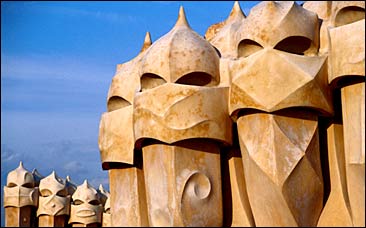
Gaudi's La Perdrera.

Gaudi’s La Perdrera.

First, you have to select one. Sure, there are postcards bought on the fly—and that’s okay, because the intention is still there. But when you have time, the selection of each card is part of what makes sending one unique. I like spinning the racks in bookstores or magazine shops around ever so slowly to see what’s available and what speaks the most about the destination I’m in. Depending on where I am, or how long I’ll be there, chances are that I’ll only be sending one.

Later, there’s something about sitting on your own, whether you’re enjoying a post-safari sundowner in the Chobe National Park and gazing out at baboons practicing their military strategies, or sipping a perfect hot cocoa in a delicate porcelain cup in a hotel bar in Barcelona, to write a little story on that six by four-inch card that further establishes your sense of a place. Taking the time to contemplate your words and relish your experience helps appreciate the destination and the present moment of being there.

At the same time, postcards are all about distance. You don’t have to plug into anything because you don’t want to be connected. Some people may sign off, “wish you were here” but that’s easy to say when you know that won’t happen. In an age when we can find out anything on our own about a place with the click of mouse, postcards enable us to share intimate thoughts about our travels that friends and family won’t learn until they open their mail, or sometimes long after we’ve returned home depending on a country’s postal service.

A trip to the village post office gives you a chance to meet locals, be brave and practice another language (even if you stink at it) and buy lots of colorful stamps. You lick them, press them onto each postcard, and then send them on their merry way. Then you keep on keeping on to your next experience whether it’s sitting pretty on a beach or gearing up to hike Machu Picchu.

For the recipient, finding one in your mailbox is like being treated to an ice cream cone, it’s a nice surprise. You check out the stamps and read the tiny words that describe the destination on the flip side. Maybe you read it leaning against your mailbox, or hold off with anticipation until you get inside and savor it over a cup of coffee. Then you follow the words of the traveler and imagine where they might be now. If they’re not home yet, you’ll have to wait to hear all about their trip but something in the postcard has you traveling with them. There’s something about putting pen to paper and dropping a postcard in the mail that no app can take the place of.

Who says you can't send a postcard from stay cation?

Who says you can’t send a postcard from staycation?

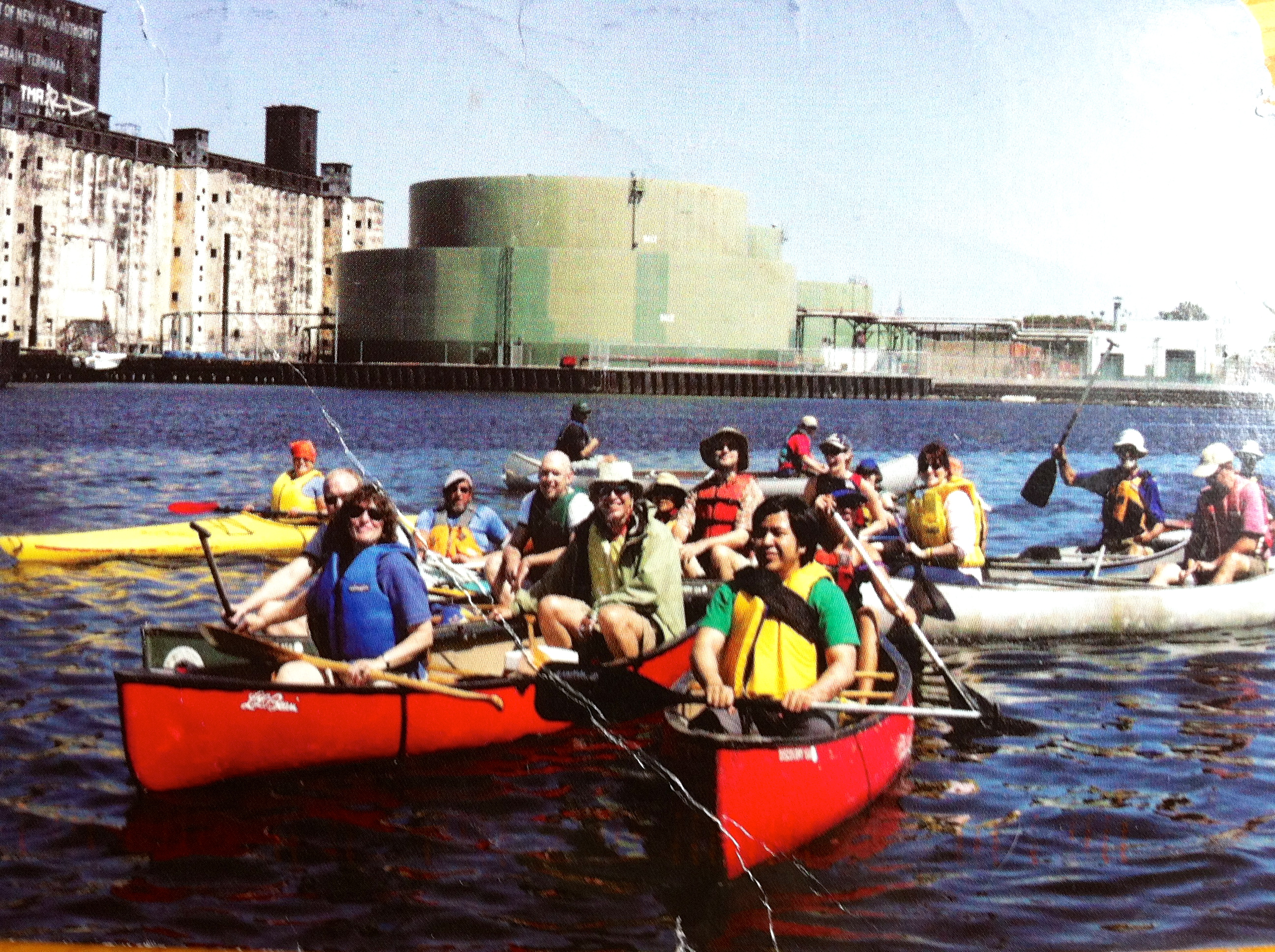
The other night I couldn’t sleep, so I got up and picked up a book I’d bought several years ago but hadn’t read. Around 22 pages into it, a postcard fell out. I abandoned the book right away and savored my find. It was a photo of people floating in canoes and kayaks with buildings and some kind of industrial ship in the background. For a minute I was stumped but when I turned it over, I couldn’t help but laugh. Posted in 2008, it was from one of my best friends. She was on fire to take a vacation but didn’t have the money to burn. Badly in need of down time, she opted for a staycation and one night invited me to join her for a sunset tour with The Gowanus Dredgers Canoe Club. Located within a 15-minute walk from the building we both live in, I was happy to join her as a tourist on that perfect August day.

Now the Gowanus is no Erie Canal. It’s basically been a dumping ground for as long as I can remember. But over the past decade, efforts have been made to restore it to some level of decency so it can rise to the level of the affluent neighborhoods around it. As we drifted down the canal, it shimmered with the iridescence only oil can bring to water. I wondered what was seeping into my sneakers. Heading towards where a scrap metal yard exists, along with other industrial businesses, every once in a while we’d get a whiff of sewage. But in the opposite direction, where it’s quieter and more residential, the water was cleaner and our guide told us that oysters were starting to call the Gowanus home. A good sign when bi-valves set up shop. Unfortunately, last January, a dolphin took a wrong turn around New York Harbor and wound up in the Gowanus. That’s not something you see everyday and its plight captivated local residents and made the news. Already ill, it didn’t stand a chance in the polluted canal. “Go-Go-Gowanus! The Canal is Wow! The memories of the slick, fragrant waters are ones I shall never forget!!,” my friend had written.

My boyfriend had a loft bed and he’d plastered the underside of it with all of my postcards. When he’d kick back in the tiny living area underneath it, he’d look up and see all of the places I’d traveled to or might be visiting at that moment. They were a storybook of my life in a way. Of places I loved and would return to with him or on my own, or never set foot in again. Of new friends and new food…always food. And a reminder of my famous line that an old boss would kid me about anytime I returned from a trip, “Let me guess?” he say. “You could live there!”

Do you want to throw them out, I asked? I couldn’t blame him if he did; after all, we were going for a major clear out. “Not just yet,” he said. Then he sat on the bed leafing through them, getting lost in faraway places.

Ice-Skating The Winter Blues Away.

Zipping around Lake Louise.

Zipping around Lake Louise.

“If I could fire Mother Nature, I would.”

Those were the latest words from a friend who owns a construction business in New York City. The winter weather has wreaked havoc on his projects, stalling them one way or another. This, in turn, does a number on his mood.

He’s not alone. There are plenty others who’ve had it up to here with the winter of 2014. Spring may be one month away but I don’t think even a betting man would put money on it. Cabin fever is at an all time high and crankiness, moodiness, over-eating, and a general malaise are some of its main symptoms.

So if you’re not among the fortunate who planned a winter getaway, there’s only one way to beat the winter blues. Instead of trying to dodge the season, why not get up, get out, and make the most of it.

Anyone watching the Winter Olympics may already feel a bit inspired to bend their lazy bones. Sure, those athletes make it look so easy but for those of us who may be a bit skittish about taking to the slopes, especially if you haven’t dropped into a fast run for quite awhile, there’s another activity that’s pretty low maintenance, affordable, and depending on where you live, super easy on the eyes.

Ice-skating.

Rideau Canal Skateway in Ottawa.  (Photo credit: Ottawa Tourism)

Rideau Canal Skateway in Ottawa. (Photo credit: Ottawa Tourism)

Before you say no way, take a look at the prettiest 10 ice-skating rinks with a view. You may discover they’re in your own backyard. If you, or anyone you know is traveling in their vicinity, give them a tip and tell them to visit. Whether or not they like to strap on a pair of skates, the spectacular views alone will captivate them.

Central Park's Wollman Rink.

Central Park’s Wollman Rink.

From skating in Central Park with the New York City skyline twinkling all around, or zipping around an ocean side rink in cut-off shorts down in San Diego, to cutting figure eights at Somerset House in London where champagne and chocolate indulgences await you, these rinks offer a unique perspective, and experience, on sightseeing.

If you can’t make it to any of the rinks listed, chances are there’s one in your town with a cool view, and a hot cocoa, that’ll suit you just fine.